
Ultrafine Probe Technology for Capturing 2–5 µm Particles in Advanced Analytical Applications
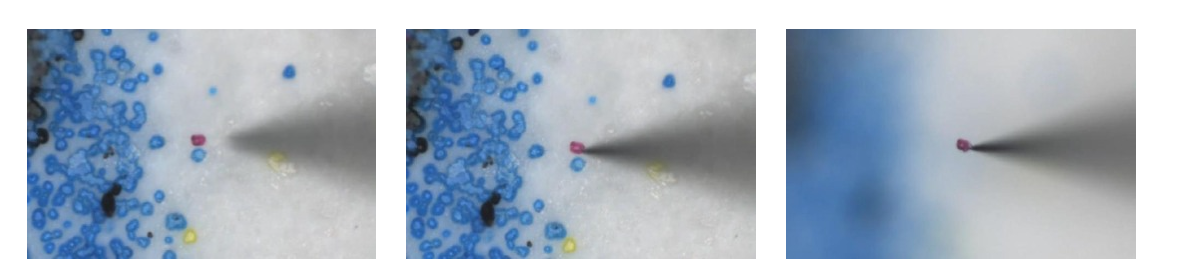
Image credit: https://www.microsupport.co.jp/
The ability to isolate and analyze microscopic particles is important across semiconductor manufacturing, battery research, electronics production, contamination investigations, materials science, and failure analysis. As manufacturing tolerances continue to decrease, particles measuring just 2–5 µm can affect product performance, reliability, and quality. These particles are often linked to defects, contamination events, and material failures. While conventional microscopy systems can detect particles of this size, the challenge is to accurately isolate a particle measuring between 2 and 5 µm without losing, damaging, or contaminating it before analysis. Ultrafine probe technology addresses this challenge by enabling controlled capture, isolation, and transfer of microscopic particles using precision tungsten probes. When integrated with analytical techniques such as Raman microscopy, FT-IR microscopy, and Scanning Electron Microscopy (SEM), these probes support detailed chemical and structural characterization. This post explores how ultrafine probe technology efficiently enables precise particle isolation and advanced analytical workflows.
Why Handling 2–5 µm Particles is Difficult
Working with particles in the 2–5 µm range introduces challenges that are very different from handling larger specimens.
- Limited Visibility: Even with magnification, these particles can be difficult to distinguish from surrounding materials. Operators often work within a very small field of view where precise positioning becomes essential.
- Strong Adhesion Forces: At microscopic dimensions, adhesion forces can dominate particle behavior. Particles may cling strongly to substrates, surrounding debris, or handling tools.At times, a particle that appears loose under the microscope may be firmly attached.
- Risk of Disturbing Adjacent Material: Many investigations focus on a specific defect particle located within a crowded area. Removing the target without affecting neighboring particles requires careful control. A poorly controlled approach may displace surrounding evidence or alter the defect site. Successful isolation requires:
- High positional accuracy
- Stable movement control
- Precise probe engagement
- Controlled extraction procedures
Importance of Controlled Extraction
Microscopic particles are often the primary evidence in a contamination investigation or failure analysis study. Any damage, deformation, or unintended transfer of surrounding material can affect subsequent analytical results. Therefore, micro-sampling workflows must emphasize controlled handling and repeatable procedures throughout the extraction process.
Application Overview: Capturing and Delivering Ultra-Fine Particles
The primary objective of micro-sampling is to capture particles as small as 2–5 µm and transfer them accurately to an analytical platform for further characterization. This process requires:
- Precise particle identification
- Controlled particle capture
- Non-destructive extraction
- Accurate particle transfer
- Preservation of particle integrity
Maintaining the original condition of the particle is particularly important when the sample undergoes chemical, structural, or compositional analysis. Any alteration introduced during handling may affect the reliability of downstream analytical results. This requirement has driven the development of specialized ultrafine probe technology.
Precision Capabilities of Ultrafine Tungsten Probes
Meeting the requirements of micro-sampling depends on the precision of the tools used during particle engagement, extraction, and transfer. Ultrafine tungsten probes provide the fine tip geometry and mechanical stability required for these operations.
Ultrafine tungsten probes are widely used for micro-scale particle handling due to their ability to engage individual particles with a high degree of precision.
- Fine Tip Geometry: The probe tip can be manufactured with extremely small dimensions, allowing controlled interaction with individual particles rather than clusters of surrounding material. This level of precision is particularly valuable when isolating defects or contaminants from densely populated surfaces.
- High Strength and Durability: Tungsten provides excellent mechanical stability while maintaining a fine tip profile. This combination supports repeatable handling performance during routine analytical workflows.
- Precise Particle Engagement: When used under microscopic observation, the probe can be positioned directly onto the target particle with minimal disturbance to the surrounding area. This controlled interaction supports accurate particle capture and transfer while helping preserve sample integrity.
- Technical Capabilities: Ultrafine tungsten probe systems can support:
- Capture of particles as small as 2 µm
- Controlled pickup and release
- Precise particle transfer
- Minimal disturbance of surrounding material
- Repeatable handling procedures
These capabilities make tungsten probes well suited for defect isolation, contamination investigations, and failure analysis applications.
How the Micro-Sampling Process Works
Micro-sampling workflows generally follow a structured sequence that emphasizes precision and repeatability.
- Identify the Target Particle: The particle of interest is located using an optical or digital microscope. The region of interest is verified before handling begins.
- Position the Probe: The ultrafine probe is positioned using a micromanipulator system that provides controlled movement and accurate probe placement.
- Capture the Particle: Controlled contact is established between the probe and the target particle. Careful engagement helps minimize disturbance during pickup.
- Isolate the Particle: The particle is lifted from the substrate while preserving the surrounding area and maintaining particle integrity.
- Transfer to an Analytical Platform: The isolated particle is transferred to a suitable substrate or sample holder for subsequent analysis.
The effectiveness of this process depends on the combined performance of visualization, positioning, environmental stability, and analytical compatibility.
System Capabilities for Ultra-Fine Particle Handling
Successful particle capture depends on the combined performance of several system components.
- High-Resolution Visualization: Optical and digital microscope systems provide detailed imaging of microscopic particles and surrounding structures. Enhanced visualization helps operators locate and engage target particles efficiently.
- Micromanipulator Control: Precision micromanipulators provide sub-micron positioning capability. This level of control supports accurate probe placement and repeatable handling procedures.
- Stable Operating Environment: Vibration can significantly affect micro-scale manipulation. Stable system design helps reduce movement during particle capture and release.
- Analytical Instrument Compatibility: The isolated particle can be prepared for analysis using a variety of characterization methods. This flexibility supports a broad range of laboratory workflows.
- Integration with Advanced Analytical Techniques: Capturing the particle is only the beginning. The ability to isolate a particle is most valuable when the sample can then be characterized using an analytical technique appropriate for the investigation.
Analytical Techniques for Characterizing Isolated Particles
Once isolated, particles can be analyzed using several advanced techniques which include:
- Raman Microscope Analysis: Raman microscopy supports chemical identification through molecular characterization. It is frequently used for contamination analysis, material identification, and defect investigations.
- FT-IR Microscope Analysis: An FT-IR microscope enables chemical analysis based on infrared absorption characteristics. It is particularly useful for identifying polymers, coatings, organic materials, and unknown contaminants.
- Scanning Electron Microscopy (SEM): SEM provides detailed surface imaging and structural characterization. When combined with elemental analysis techniques, SEM can reveal important information about particle composition and morphology.
Together, these analytical methods help laboratories in:
- Chemical identification
- Structural analysis
- Material characterization
- Defect investigation
- Contamination source identification
Role of Probes in Defect Isolation and Failure Analysis
Defect isolation is one of the most important applications for ultrafine probe technology. In many investigations, the target particle represents the key source of information needed to determine why a product failed or why a defect occurred. Examples include contamination particles on semiconductor wafers, foreign material embedded within battery components, or microscopic debris found on electrical assemblies. Accurate particle isolation supports:
- Root cause analysis
- Failure investigations
- Process troubleshooting
- Product quality improvement
- Contamination source identification
Obtaining a representative sample of the defect particle helps improve confidence in analytical findings and corrective actions.
Applications of Ultrafine Probes Across Industries
The ability to capture and transfer 2–5 µm particles supports a wide range of industries.
Ultrafine probe technology supports a wide range of analytical and manufacturing applications.
- Semiconductor and Electronics Manufacturing: Applications include:
- Wafer contamination analysis
- Defect particle isolation
- Failure investigations
- Process monitoring
- LCD Panel Inspection: Applications include:
- Display defect investigations
- Particle contamination analysis
- Manufacturing quality control
- Battery and Energy Materials: Applications include:
- Electrode contamination analysis
- Foreign particle investigations
- Material characterization
- Failure analysis
- Automotive Components: Applications include:
- Reliability investigations
- Contamination studies
- Defect analysis of electrical systems
- Chemical and Materials Research: Applications include:
- Unknown particle identification
- Material characterization
- Contamination investigations
- Glass, Paint, and Printing Industries: Applications include:
- Surface defect analysis
- Foreign particle characterization
- Product quality investigations
- Medical and Forensic Laboratories: Applications include:
- Trace evidence collection
- Contamination analysis
- Microscopic particle investigations
Advantages of Ultrafine Probe-Based Sampling
Ultrafine probe systems provide several advantages for particle isolation workflows.
- Ability to Handle Extremely Small Particles: Particles measuring 2–5 µm can be captured and transferred with a high degree of precision.
- Non-Destructive Extraction: Controlled handling helps preserve particle integrity during sampling and transfer.
- High Precision and Repeatability: Micromanipulator-guided workflows support consistent positioning and repeatable handling procedures.
- Reduced Contamination Risk: Controlled engagement helps reduce unnecessary contact and minimize contamination during handling.
- Efficient Analytical Preparation: Particles can be transferred directly to substrates compatible with Raman microscopy, FT-IR microscopy, and SEM analysis. This can simplify preparation workflows and improve laboratory efficiency.
Together, these capabilities can simplify sample preparation and support more consistent analytical workflows.
Best Practices for Ultra-Fine Particle Handling
Successful particle isolation depends on proper technique. Here are some best practices that can improve handling consistency.
- Operate Under High Magnification: Clear visualization improves targeting accuracy and reduces positioning errors.
- Use Precision Positioning Systems: Micromanipulators provide the control required for reliable particle engagement.
- Minimize Contact Force: Gentle, controlled interaction helps preserve particle integrity and reduce disturbance.
- Maintain a Clean Environment: Clean handling conditions help prevent contamination during transfer and analysis.
Common Challenges and How to Address Them
Even with advanced equipment, micro-scale sampling presents challenges.
- Verify probe alignment
- Use controlled movement
- Maintain continuous visual observation
- Poor Visibility:
- Optimize microscope illumination
- Improve imaging conditions
- Adjust magnification appropriately
- Sample Contamination:
- Follow clean handling procedures
- Minimize unnecessary contact
- Use clean analytical substrates
- Inconsistent Results:
- Standardize workflows
- Use repeatable positioning procedures
- Train operators on consistent handling techniques
Instrumentation for Ultrafine Particle Capture
A typical micro-sampling workflow may include:
- Ultrafine Tungsten Probes: Fine-tip probes used for the precise capture, isolation, and transfer of microscopic particles as small as a few microns.
- Precision Micromanipulator Systems: Controlled positioning systems that enable accurate probe movement and particle handling at micro-scale dimensions.
- Integrated Microscope Platforms: Optical or digital microscope systems that provide real-time visualization during particle identification and manipulation.
- Sample Transfer Accessories: Specialized tools and substrates that support secure particle transfer between sampling and analytical stages.
- Raman Microscopy Compatibility: Supports direct transfer of isolated particles for molecular and chemical characterization using Raman analysis.
- FT-IR Microscopy Compatibility: Enables preparation and transfer of particles for infrared-based material identification and contamination analysis.
- SEM Compatibility: Facilitates particle transfer for high-resolution imaging, morphology evaluation, and structural characterization using Scanning Electron Microscopy.
Together, these tools support accurate particle isolation and analytical preparation.
For laboratories focused on contamination analysis, defect isolation, failure analysis, and advanced materials characterization, integrated solutions can help streamline workflows while improving confidence in analytical results.
Micro Support Tungsten Probes for Precision Particle Isolation
Micro Support tungsten probes are specifically developed for micro-sampling, particle isolation, and microscopic material handling applications. These probes are available in tip diameters ranging from 0.2 µm to 30 µm, allowing users to select the appropriate geometry based on particle size and sampling requirements. Ultra-fine 0.2 µm and 0.5 µm probe tips are particularly useful for capturing and transferring particles in the 2–5 µm range, while larger probe sizes support general manipulation and manual handling tasks.
When integrated with microscope-guided micromanipulator systems, Micro Support tungsten probes support a wide range of precision operations, including isolating foreign particles, collecting contamination from surfaces, extracting embedded defects, handling thin films, and probing micron-scale structures. Their fine tip geometry enables controlled engagement with individual particles while minimizing disturbance to surrounding material.
Key features include:
- Tip diameters from 0.2 µm to 30 µm for different sampling requirements
- Capture and transfer of particles as small as 2 µm
- High-strength tungsten construction for consistent tip stability
- Compatibility with manual operation or microscope-integrated micromanipulators
- Optional probe bending accessories for accessing difficult sampling locations
- Support for contamination analysis, defect isolation, and failure analysis workflows
These capabilities make Micro Support tungsten probes particularly valuable in semiconductor manufacturing, LCD panel inspection, battery research, electrical component analysis, chemical investigations, glass and paint defect analysis, and forensic laboratories where accurate isolation of microscopic particles is often the first step in identifying the root cause of a defect or contamination event.
Choose Micro Support Tungsten Probes to Achieve Precision Micro-Sampling for Advanced Analytical Workflows
A single microscopic particle may provide valuable insight into a defect, contamination source, material failure, or process-related issue. Ultrafine tungsten probes developed by Micro Support help achieve this when integrated with analytical techniques such as Raman microscopy, FT-IR microscopy, and SEM. Barnett Technical Services offers authentic Micro Support products including the tungsten probes. Whether your application involves semiconductor devices, LCD panels, batteries, electrical components, automotive materials, chemicals, glass, paint, printing materials, medical investigations, or forensic analysis, the team at Barnett can help support your micro-sampling and analytical workflow requirements. Contact our team to discuss your particle isolation challenges and analytical objectives.