
Raman Spectroscopy in Medical Research
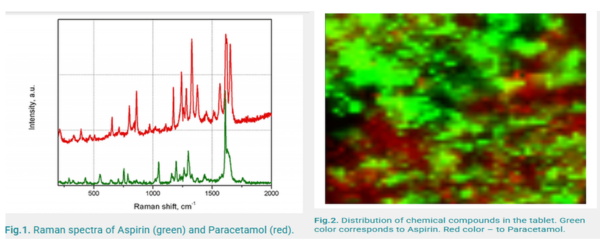
Image Credit: https://solinstruments.com
Raman spectroscopy has emerged as a cutting-edge technique in medical diagnostics and anesthesia monitoring. By providing molecular-level insight without the need for dyes or invasive procedures, this non-destructive method offers significant advantages for both clinical researchers and healthcare practitioners. Raman spectroscopy in medicine enables fast, accurate, and label-free analysis of biological samples, pharmaceutical formulations, and even exhaled anesthetic agents.
Unlocking the Power of Raman Spectroscopy in Medical Applications
Confocal Raman Microscopy utilizes the Raman effect, the interaction between light and molecular vibrations to capture detailed chemical fingerprints of biological or pharmaceutical samples. This technology provides high spatial resolution and real-time feedback, making it an increasingly valuable tool in both medical diagnostics and intraoperative anesthesia monitoring.
As an analytical method, Raman spectroscopy allows clinicians and researchers to:
- Identify tissue types and detect molecular changes in real time
- Monitor drug concentration and distribution in vivo
- Ensure drug purity and stability in pharmaceutical compounds
This ability to analyze samples in their native state without altering chemical composition makes Raman spectroscopy ideal for clinical, pharmaceutical, and biomedical environments.
Medical Research Applications of Raman Spectroscopy
1. Drug Purity and Quality Control in Pharmaceuticals
Raman spectroscopy supports pharmaceutical quality assurance by identifying active pharmaceutical ingredients (APIs), excipients, and impurities in solid, liquid, or powdered formulations. Its ability to provide both qualitative and quantitative data ensures consistent product quality across manufacturing and clinical environments.
2. Tablet and Capsule Uniformity
Raman chemical mapping enables researchers to evaluate the spatial distribution of APIs and excipients in complex formulations, including multilayered tablets. This ensures proper dosing and efficacy while helping meet regulatory standards for content uniformity.
3. Polymorph Detection and Stability Monitoring
Many drugs exist in multiple polymorphic forms, each with different bioavailability. Raman spectroscopy easily distinguishes these polymorphs through unique molecular vibrations, offering pharmaceutical companies critical insights during formulation and shelf-life testing.
4. Counterfeit Drug Detection
By comparing molecular fingerprints with validated reference materials, Raman spectroscopy can detect counterfeit medications, even when visual differences are minimal. This supports efforts to improve supply chain integrity and patient safety.
5. Real-Time Anesthesia Monitoring
One of the most promising medical applications of Raman spectroscopy is in real-time anesthesia monitoring. Researchers are exploring Raman-based sensors capable of detecting exhaled anesthetics or blood plasma drug concentrations. This technology could:
- Enable personalized dosing during surgery
- Reduce risk in sensitive populations
- Improve recovery outcomes by ensuring optimal anesthetic delivery
Future applications include portable Raman devices for continuous, non-invasive monitoring of patients in operating rooms and intensive care units.
Advantages of Raman Spectroscopy in the Medical Research Field
Non-Invasive and Label-Free
Raman spectroscopy allows for in situ analysis of biological tissues, fluids, and drugs without chemical staining or physical disruption.
Real-Time Molecular Insights
Raman systems deliver immediate feedback on the chemical state of a sample—ideal for intraoperative use or bedside diagnostics.
High Sensitivity and Specificity
The method can detect subtle changes in chemical composition, making it valuable for identifying disease markers, drug interactions, or tissue abnormalities.
Minimal Sample Preparation
From blood plasma to pharmaceutical coatings, Raman spectroscopy requires no elaborate prep, reducing the time between sampling and result.
Advanced Raman Systems for Medical Applications
Barnett Technical Services offers a range of high-performance Raman systems designed for the rigorous demands of medical research and pharmaceutical diagnostics.
Confotec® NR500
High-speed Raman mapping system ideal for drug quality control and research into molecular dynamics.
Confotec® Duo
Dual-laser system providing flexible spectral analysis across different formulations and excipients.
Confotec® MR Series (MR200–MR750)
Versatile confocal Raman microscopes with high-resolution imaging—excellent for detecting polymorphs, drug distribution, or analyzing anesthesia biomarkers.
Confotec® CARS System
The most advanced Raman imaging system for medical research, combining Coherent Anti-Stokes Raman Spectroscopy (CARS), conventional Raman, and confocal microscopy. Ideal for label-free tracking of molecular behavior during biological or anesthetic processes.
Product Line: