
Raman Spectroscopy for Various Carbon-Rich Structures
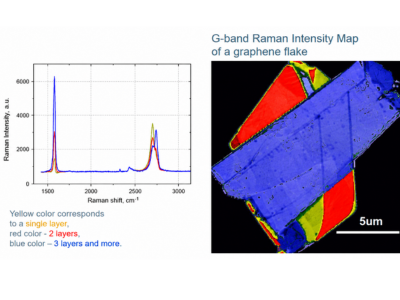
Image Credit: https://solinstruments.com
Raman spectroscopy has become one of the most essential tools for characterizing carbon-rich materials in research and industrial environments. Its non-destructive, label-free nature and ability to capture structural and molecular-level information make it ideal for assessing the purity, quality, and structural characteristics of various carbon forms—ranging from graphite and graphene to carbon nanotubes and amorphous carbon.
Why Raman Spectroscopy for Carbon Materials?
Raman spectroscopy works by analyzing vibrational modes in carbon-rich materials. This technique allows for the differentiation between various carbon-rich materials and to help assess subtle structural changes in these materials.
Confocal Raman Microscopy enhances this further by offering high spatial resolution and 2D chemical imaging, allowing surface = mapping of carbon-rich materials without damaging the sample.
Applications of Raman Spectroscopy in Carbon Analysis
1. Graphene and Layered Carbon Structures
Graphene’s exceptional electrical and mechanical properties demand precise quality control. Raman spectroscopy of carbon materials is used to evaluate the number of layers (via the 2D peak), defect levels (D/G ratio), and uniformity across samples. Raman imaging enables mapping of large surface areas for monolayer verification and structural consistency.
Key features such as the D, G, and 2D bands allow scientists to:
- Determine structural disorder or defects (via D band intensity)
- Assess crystallinity (G band sharpness)
- Identify the number of graphene layers (using 2D peak shape)
2. Carbon Nanotubes (CNTs)
Both single-walled and multi-walled CNTs are widely used in electronics, composites, and sensors. Raman spectroscopy provides insights into tube diameter, electronic type (metallic vs. semiconducting), and mechanical strain, helping researchers qualify carbon materials for functional performance.
3. Diamond-Like Carbon and Hard Coatings
For tribological applications, the sp³/sp² bonding ratio directly impacts hardness and durability. Raman spectroscopy helps in evaluating these ratios and performing depth-resolved analysis for wear-resistant coatings. Confocal Raman systems can non-invasively assess coating thickness and interface quality.
4. Battery Anode Materials
Lithium-ion battery anodes often rely on graphite and amorphous carbon. Raman spectroscopy of carbon supports quality assurance by characterizing crystallinity, lithiation effects, and degradation mechanisms, essential for enhancing energy storage performance.
5. Environmental and Biomedical Monitoring
Raman spectroscopy can detect carbon-based pollutants such as soot and black carbon in environmental and biological systems. Its label-free capability allows for in-situ analysis in tissues, composites, and complex media—supporting toxicology, pollution research, and biomedical material assessments.
Key Benefits of Carbon Analysis with Raman Spectroscopy
- Non-Destructive and Label-Free: Ideal for delicate samples; no dyes or preparation needed
- Quantitative Defect Assessment: D/G band analysis enables tracking of structural disorder
- High Spatial and Depth Resolution: Confocal systems provide detailed 2D/3D imaging of carbon in Raman spectroscopy
- Versatile Material Compatibility: Applicable to conductive and non-conductive carbon structures
- Fast and Reproducible Measurements: Suitable for both lab-based R&D and industrial QC workflows
Advanced Raman Systems for Carbon Characterization
Barnett Technical Services offers a full suite of Confocal Raman Microscopes designed to meet the demands of carbon materials research and industrial analysis.
Confotec® NR500
Engineered for fast 2D/3D chemical imaging, the NR500 is ideal for routine and advanced carbon analysis. It provides excellent spectral sensitivity and spatial resolution for characterizing graphene, CNTs, and graphite.
Confotec® Duo
A dual-laser Raman system that enhances analytical flexibility. Perfect for heterogeneous or multi-layer carbon samples where variable excitation wavelengths are required.
Confotec® MR Series (MR200–MR750)
From compact models to high-resolution platforms, the MR Series supports depth profiling, defect analysis, and multilayer structure evaluation in carbon materials with Raman spectroscopy.
Product Line: