
Raman Spectroscopy for Polycrystalline Silicon Solar Cell Inspection
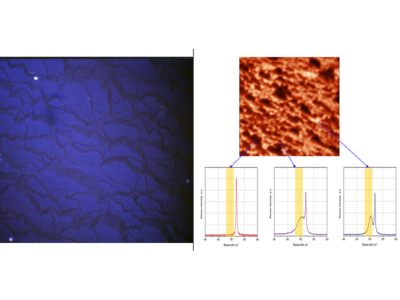
Image Credit: https://solinstruments.com
In the rapidly evolving solar energy market, maintaining the structural and chemical integrity of photovoltaic materials is crucial for achieving improvements in efficiency and reliability. Polycrystalline silicon (poly-Si) remains the most widely used and cost-effective solar cell material commercially available. As demands for quality, performance, and durability increase, the need for precision inspection tools has never been greater.
Confocal Raman Microscopy has emerged as a leading method for non-destructive, high-resolution analysis of solar-grade silicon. This advanced technique provides researchers and manufacturers with deeper insights into the thermal, electronic, and optical properties of their materials, enabling comprehensive material characterization without sample damage and supporting geometry-specific analysis such as defect density calculations through phosphorous depth profiling and stress distribution studies.
Confocal Raman Microscopy: A Comprehensive Material Assessment Solution
Confocal Raman Microscopy combines the powerful chemical identification capabilities of Raman spectroscopy with the superior spatial resolution of confocal microscopy. This integration enables molecular chemical imaging of materials at the micro-scale longitudinally.
For solar silicon analysis, this technique reveals critical material characteristics including crystal orientation, structural defects, and stress fields—all without physical sectioning or sample alteration.
This advantage makes confocal Raman microscopy particularly valuable for silicon solar cell microspectroscopy, where understanding microstructural variations is essential for optimizing photovoltaic efficiency.
Key Applications in Polycrystalline Silicon Analysis
1. Grain Boundary Detection
Grain boundaries in polycrystalline silicon act as recombination centers that can significantly reduce solar cell efficiency. Confocal Raman Microscopy precisely identifies grain boundary locations through detailed mapping of localized crystal orientation and vibrational modes, enabling targeted optimization strategies.
2. Stress and Strain Mapping
Manufacturing processes including wafer sawing, doping, and thermal cycling introduce mechanical stress that can compromise device performance and longevity. Raman peak shifts in the 520 cm⁻¹ region provide sensitive measurements of internal stress, offering early identification of regions prone to cracking or failure.
3. Phase Identification and Crystallinity Assessment
The technique analyzes Raman peak profiles—including shape, width, and symmetry—to distinguish between crystalline, amorphous, and intermediate silicon phases. This capability enables manufacturers to evaluate crystallization process efficiency throughout ingot growth or film deposition.
4. Process Verification and Quality Control
Confocal Raman Microscopy provides real-time verification of critical processes including phosphorus diffusion, anti-reflective coating deposition, and passivation procedures, ensuring consistent material quality across production batches.
5. Failure and Degradation Analysis
For field-deployed modules and laboratory testing, Raman imaging identifies micro-cracks, contamination, and phase changes resulting from weathering, light-induced degradation, or thermal cycling. These insights support improvements in cell design and materials engineering.
Advantages of Confocal Raman Microscopy for Solar Silicon Research
Non-Destructive Analysis: Samples remain intact while providing comprehensive chemical and structural profiles, preserving valuable materials for additional testing.
High-Resolution Imaging: Sub-micron spatial resolution enables detection of critical features including grain boundaries and surface inclusions.
High-Throughput Capability: Rapid, reproducible results make the technique ideal for both laboratory research and inline manufacturing applications.
Minimal Sample Preparation: Live inspection capabilities support real-time research and development while enabling comprehensive post-process quality control.
These advantages establish Confocal Raman Microscopy as an indispensable tool throughout the entire solar cell lifecycle, from initial material characterization to end-of-life diagnostics.
Barnett Technical Services: Precision Solar Cell Inspection Solutions
Barnett Technical Services offers a comprehensive selection of Confocal Raman Microscopes specifically designed for materials science and energy applications. Our systems are engineered for reliability and repeatability, providing critical insights into the most challenging photovoltaic sample types.
Confotec® NR500
High-performance Raman microscope enabling 3D chemical mapping and depth-resolved analysis. Optimized for advanced research in silicon solar cell photoactive layers, semiconductor characterization, and wafer metrology applications.
Confotec® MR Series (MR200, MR350, MR520, MR750)
Fully configurable and customizable systems designed for laboratories requiring flexibility across diverse solar cell inspection processes. The High Precision Confotec® MR200 offers exceptional capabilities for trace strain analysis and crystallinity studies of solar silicon wafers.
Confotec® Coherent Anti-Stokes Raman Spectroscopy (CARS) Spectrometer
Advanced CARS technology enhances signal intensity for ultra-sensitive Raman imaging, ideal for detecting trace defects and examining nonlinear optical phenomena in photovoltaic materials.
Each system is supported by comprehensive technical support, regulatory consulting, and training services to ensure seamless integration into your research or production protocols.
Product Line: