All posts by 27481873

The Senarmont Method: Precision Optical Stress Measurement with Luceo Strain Meters

Strain measurement in transparent materials such as glass, resin, and optical films requires high levels of precision, accuracy, and reliability. Since its founding in 1966, Luceo has been a pioneer in polarization technology, developing advanced instruments that extend the classical Senarmont method into powerful, modern tools for quantitative strain analysis.

What is the Senarmont Method?

The Senarmont compensator method is one of the most precise optical techniques for measuring birefringence (retardation) in transparent, stressed materials. It works by:

  • Passing polarized light through a sample.
  • Rotating an analyzer until the light intensity shifts from maximum brightness to extinction (darkness).
  • Relating the rotation angle directly to the sample’s retardation.

In its simplest form, this method allows operators to convert analyzer rotation into retardation values using a fixed proportionality constant (e.g., angle × 3.033 = nm of retardation when using monochromatic green light). This provides a direct, quantitative measure of internal stress.

How the Technique Works

The Senarmont system combines a quarter-wave plate (typically quartz or mica) with a rotating analyzer. When monochromatic light is used, a 180° rotation of the analyzer corresponds to one full wavelength of retardation. This straightforward relationship enables highly accurate, repeatable measurements of optical path difference.

Applications extend to:

  • Transparent glasses and plastics
  • Optical films
  • Crystals and fibers
  • Other birefringent materials, including those in biological or polymer studies

Luceo’s Advanced Implementation

While the Senarmont method is powerful, its accuracy has historically been limited by operator dependency, different users could record slightly different extinction points. Luceo has eliminated this problem by combining:

  • High-precision optical components (polarizers, wave plates, and filters manufactured in-house)
  • Semi-automated measurement systems that remove subjectivity from visual observation
  • Broadband capability across 450–1,100 nm for versatility in material applications

From Manual to Semi-Automated Precision

Traditional Senarmont systems required careful human observation of extinction points. LUCEO’s semi-automated instruments measure changes in brightness objectively, minimizing human error while preserving the method’s inherent accuracy. This enables repeatable and reliable results across different operators, batches, and production environments.

Applications Across Industries

The Senarmont method, implemented in Luceo’s StrainEye series and other instruments, supports a wide range of industrial quality control applications:

  • Glass Manufacturing – Residual stress analysis of optical glass, safety glass, and windows.
  • Plastics & Films – Inspection of injection-molded or extruded parts, ensuring stress-free optical performance.
  • Electronics & Semiconductors – Verifying stress-free assembly of optical devices and semiconductor packages.
  • Medical Devices – Evaluating transparent housings and components where internal stress could affect safety or reliability.

Advantages in Real-World Production

Unlike idealized lab-only methods, Luceo’s modern Senarmont-based instruments are designed for real-world production environments, where lighting conditions and operator experience may vary. Their systems maintain accuracy even when conditions are less than perfect delivering reliable, quantitative stress data where manufacturers need it most.

Partnering with Luceo Technology

By building on the proven foundation of the Senarmont method and integrating advanced optics and automation, Luceo has transformed a classical laboratory technique into a state-of-the-art solution for modern manufacturing.

Their instruments provide:

  • Non-destructive, quantitative stress analysis
  • Repeatable results independent of operator skill
  • Compatibility with diverse transparent materials

Barnett Technical Services is proud to be an authorized distributor of Luceo products. You can explore Luceo’s full range of strain meters and polariscopes at:
Barnett Technical Services – Polariscopes

Rotated Angle of Analyzer 0° This angle gives a position where a region to be assayed (indicated by an arrow) appears with the maximum brightness.

Rotated Angle of Analyzer 0° This angle gives a position where a region to be assayed (indicated with an arrow) appears with the maximum brightness.

Rotated Angle of Analyzer 0° This angle gives a position where a region to be assayed (indicated with an arrow) appears with the maximum brightness.

Rotated Angle of Analyzer 7° This angle gives a position where a region to be assayed (indicated with an arrow) appears with the maximum darkness.

Rotated Angle of Analyzer 11° A rotating frame of analyzer is rotated so that a region to be assayed (indicated with an arrow) gets darker.

Rotated Angle of Analyzer 20° A rotating frame of analyzer is rotated so that a region to be assayed (indicated with an arrow) gets darker.

Rotated Angle of Analyzer 28° This angle gives a position where a region to be assayed (indicated with an arrow) appears with the maximum darkness.

Rotated Angle of Analyzer 35° A rotating frame of analyzer is rotated so that a region to be assayed (indicated with an arrow) gets further darker.

Rotated Angle of Analyzer 89° This angle gives a position where a region to be assayed (indicated with an arrow) appears with the maximum darkness.

Celebrating 15 Years of Expertise: From Optical Analysis Pioneers to Comprehensive Solutions Partners

Thank you for 15 incredible years of specialized expertise, trusted partnerships, and scientific advancement.

A Journey Built on Deep Technical Knowledge

Fifteen years ago, Barnett Technical Services (BTS) was founded with a focused mission: to bridge the gap between advanced optical analysis techniques and practical laboratory applications.

What began as specialized consulting and training in optical methods for chemical and material analysis has evolved into a comprehensive solutions partnership that serves the unique needs of researchers, manufacturers, and innovative startups.

Since 2010, we’ve built our reputation not on size, but on deep technical expertise. Our knowledge of optical methods, materials characterization, and analytical instrumentation has made BTS the go-to partner for organizations seeking more than just equipment – they seek genuine insight and personalized support.

From Consulting Specialists to Complete Solutions

Our growth has been organic and driven by client needs. We started by consulting and training researchers in optical techniques to help them unlock the potential of light-based analysis.

As partnerships grew, clients asked us to go further – not only to explain techniques, but also to identify and implement the right instrumentation. This natural progression led us to become both consultants and distributor partners, while always retaining our consulting-first foundation.

Today, BTS operates as a true one-stop partner – combining technical expertise with access to advanced instrumentation and support that extends far beyond installation.

Specialized Expertise That Makes the Difference

Our portfolio reflects our focused expertise in optical and thermal analysis methods:

Confocal Raman Microscopy – Enabling molecular identification and materials characterization with exceptional spatial resolution

Thermal Analysis Systems – From Hot Disk® thermal conductivity instruments to comprehensive thermal characterization solutions

Strain in Optics – Including Luceo polariscopes for stress analysis and precision micromanipulation systems

Specialized Gas Analysis – ABB Los Gatos Research instruments for trace gas and isotope analysis

Surface Characterization – Orihara surface stress meters for thin film and coating analysis

Each instrument in our portfolio is selected not just for its technical capabilities, but for how well it integrates with our ability to provide expert application guidance, training, and ongoing support.

More Than Equipment: Education and Innovation Support

What truly distinguishes BTS is our commitment to knowledge transfer. Our training programs, including specialized courses like “Business Fundamentals for Scientists and Engineers,” help technical professionals navigate both the scientific and commercial aspects of their work.

We also actively support innovation through InnoGrove, our coworking space, providing resources and mentorship to startup companies developing the next generation of analytical technologies. This connection to emerging technologies keeps us at the forefront of industry developments while supporting the entrepreneurial spirit that drives scientific advancement.

The Personal Partnership Advantage

In an industry often dominated by large corporations, our personalized approach is our strength. Every client receives dedicated attention from our experienced team. We take time to understand your specific challenges, application requirements, and operational constraints. This allows us to recommend solutions that truly fit your needs rather than simply pushing the most popular products.

Our relationships with leading manufacturers enable us to provide not just equipment access, but deep application knowledge and technical support that larger distributors often cannot match.

Partnering with Innovation

Over the past 15 years, we’ve had the privilege of supporting breakthrough research in materials science, pharmaceuticals, electronics, and advanced manufacturing. From helping startup companies validate new materials to supporting established manufacturers optimize their processes, our expertise has contributed to discoveries and innovations across diverse scientific disciplines.

Our experience working with both Fortune 500 companies and early-stage startups gives us unique insight into the full spectrum of analytical needs – from fundamental research to commercial applications.

Looking Forward: The Next Chapter of Excellence

As we celebrate this 15-year milestone, we’re excited about the future of analytical instrumentation. Emerging technologies promise to revolutionize how scientists and engineers approach materials characterization and chemical analysis.

We’re committed to staying at the forefront of these developments, continuously expanding our expertise and vendor partnerships to bring you access to tomorrow’s analytical capabilities today. Our foundation in consulting ensures we’ll always approach new technologies with the critical eye of experienced practitioners.

A Personal Thank You

To our clients, vendor partners, and colleagues in the scientific community: thank you for trusting BTS with your analytical challenges over the past 15 years. Your confidence has enabled our growth from a specialized consulting firm into a comprehensive solutions partner.

Every successful project, every training session, and every breakthrough enabled by our instruments strengthens our commitment to being more than a supplier – we are your partner in scientific success.

Ready for Your Next Analytical Challenge?

Whether you’re exploring new materials, developing innovative products, or seeking to optimize existing processes, our team brings 15 years of specialized expertise to support your success.

Contact Information:

Here’s to the next 15 years of analytical excellence, innovative partnerships, and scientific discovery together!

Barnett Technical Services at Analitica Latin America 2025 : Advancing Microscopy and Micro Sample Handling

Visit Booth G075 for Advanced Microscopy Solutions

Barnett Technical Services (BTS) is pleased to announce our participation at Analitica Latin America 2025, one of the premier international events for laboratory technology and analytical chemistry. Join us in Sao Paulo, Brazil, from September 23–25 at booth G075, where we will present innovative solutions in micro sample handling and Raman microscopy.

Transforming Micro Sample Handling with MicroSupport

Experience the next level of sample handling with MicroSupport micromanipulators. These advanced systems are built for precision, offering accurate movement control ideal for research and industry applications.

  • Features include a zoom microscope with a motorized XYZ stage
  • Software-controlled dual-arm system for steady manipulation
  • Compatible with various micro-tools, including scrapers, knives, and probes
  • Suitable for glovebox integration for inert atmosphere sampling

From analyzing complex microstructures to eliminating contaminants in semiconductor and electronic components, MicroSupport ensures unmatched accuracy and control. BTS, an authorized distributor, provides full access to the complete suite of MicroSupport technologies.

SOL Raman Microscopes: Clarity Through Spectroscopy

Gain deep insights into material composition with SOL Instruments’ Confocal Raman Microscopes. Known for innovation in light measurement and elemental analysis, SOL offers tools built for accuracy and durability.

  • Enables precise chemical mapping at the nano and micro scale
  • Ideal for materials science, pharmaceuticals, and food quality research
  • Backed by over two decades of expertise in spectroscopy and microscopy

As an authorized distributor, BTS ensures reliable access to SOL’s powerful Raman systems, helping researchers make confident, data-driven decisions.

About Analitica Latin America 2025

Analitica Latin America is the premier Latin American platform connecting the analytical chemical industry with research, government, and academia. This year’s event offers:

  • Cutting-edge presentations at the Analitica Congress
  • Scientific papers and technical sessions
  • The latest innovations in laboratory technology, biotechnology, food science, cosmetics, and more

Meet Barnett Technical Services at Booth G075

Stop by booth G075 to speak with our specialists and explore how MicroSupport and SOL Instruments can enhance your analytical workflows.

Learn More:

We look forward to seeing you in Sao Paulo!

Barnett Technical Services at M&M 2025: Advancing Microanalysis with Cutting-Edge Technologies

Barnett Technical Services (BTS) is proud to participate in Microscopy & Microanalysis (M&M) 2025, the world’s largest gathering of microscopy and microanalysis professionals. Join us from July 27-31 in Salt Lake City, Utah, at booth 2012, where we’ll showcase cutting-edge technologies in micromanipulation, cathodoluminescence analysis, and Raman spectroscopy.

MicroSupport: Transforming Micro Sample Handling

Achieve unmatched accuracy in micro sample manipulation with MicroSupport micromanipulators. These precision-engineered systems offer researchers and engineers a reliable way to handle even the most delicate micro-objects with ease.

  • Software-controlled motion through a zoom microscope and motorized XYZ stage
  • Tools include probes, knives, scrapers, and liquid handling accessories
  • Suitable for semiconductor research, electronics, and pharmaceutical industries

Whether you’re isolating minute particles or analyzing tiny sample regions, MicroSupport empowers your work with precision and flexibility. BTS is your trusted source for these innovative tools.

SOL Instruments: Advanced Raman Microscopy

SOL Instruments delivers powerful Confocal Raman Microscopes designed for molecular and elemental analysis. Their systems are built for precision, reliability, and ease of use.

  • Ideal for materials science, life sciences, and nanotechnology
  • Equipped for detailed chemical mapping and spectral analysis
  • Supported by 20+ years of innovation in spectroscopy and microscopy

As an authorized SOL distributor, BTS helps researchers harness these tools to uncover critical insights in their work.

About Microscopy & Microanalysis 2025

M&M 2025 is a global hub for professionals exploring the frontiers of microscopy. The conference offers:

  • A dynamic technical program with presentations, workshops, and discussions
  • Unparalleled networking opportunities with leaders in academia and industry
  • A vibrant exhibit hall featuring the latest tools and technologies

Visit Barnett Technical Services at Booth 1103

Stop by booth 2012 to connect with our experts and experience the future of microanalysis. Discover how MicroSupport and SOL Instruments can help advance your research and development goals.

Learn More:

We look forward to seeing you in Salt Lake City!

Laser-Based Gas Analyzers in Greenhouse Gas Emissions Detection and Analysis

As the impact of climate change intensifies, accurate and reliable methods of detecting and analyzing greenhouse gas (GHG) emissions have become critical for industries, governments, and researchers. Whether it’s methane escaping from livestock operations, nitrous oxide emissions in agricultural zones, or carbon dioxide buildup in urban areas, quantifying the concentration of these gases is essential for mitigation and compliance. Laser-based gas analyzers have become an essential component in detecting and analyzing greenhouse gases with precision and consistency.

What Are Laser-Based Gas Analyzers?

Laser-based gas analyzers utilize highly sensitive spectroscopic techniques to detect and quantify trace gases in real time. Among the most advanced and widely used methods is Off-Axis Integrated Cavity Output Spectroscopy (OA-ICOS)—an evolution of Cavity Ring-Down Spectroscopy (CRDS)—which delivers superior accuracy, stability, and speed.

These instruments work by directing laser light into a high-reflectivity optical cavity containing the gas sample. As light interacts with the gas molecules, it is absorbed at specific wavelengths characteristic of the gas in the cell. By analyzing the absorption pattern, the system calculates the gas concentration with exceptional precision.

Why Laser-Based Technology Excels at GHG Monitoring

Laser-based gas analyzers offer several distinct advantages over traditional detection methods:

  • High Sensitivity: Capable of detecting gases at parts-per-billion (ppb) or even parts-per-trillion (ppt) levels.
  • Fast Response Time: Enables real-time, in-situ measurements—critical for dynamic environments.
  • Selectivity and Accuracy: Reduces false positives and ensures reliable readings in complex gas mixtures.
  • Flexible Deployment: Available in portable, drone-mounted, underwater, and laboratory/stationary formats.
  • Low Maintenance: Minimal calibration needs and no consumables make them cost-effective over time.

Applications in Greenhouse Gas Emissions Detection

Laser-based gas analyzers are widely used in a variety of sectors to detect and measure emissions with precision:

Wastewater Treatment: Monitor methane and CO₂ emissions during anaerobic digestion processes and aeration stages.

Urban Air Monitoring: Track air pollution and GHG levels in real time for climate research, public health, and smart city initiatives.

Agricultural and Livestock Areas: Measure methane from enteric fermentation and manure decomposition, enabling better management practices.

Geological Applications: Quantify gas fluxes from soil, volcanic activity, and subsurface emissions for both research and exploration.

Emergency Response: Rapidly detect and analyze toxic or flammable gases in disaster zones, ensuring safe and informed decision-making.

From Detection to Analysis: Deriving Actionable Insights

Detection is only the first step. Laser-based analyzers also provide deep analytical capabilities:

  • Concentration Monitoring: Accurately track gas levels over time.
  • Isotopic Analysis: Differentiate between natural and anthropogenic sources of gases like methane and carbon dioxide.
  • Data Integration: Export data into environmental models, compliance reports, or real-time dashboards.
  • Flux Calculations: Estimate greenhouse gas exchange between land, water, and atmosphere.

These insights empower researchers and environmental professionals to design effective emission reduction strategies and meet increasingly stringent regulatory requirements.

Bringing It All Together

Laser-based gas analyzers are transforming the way we detect and analyze greenhouse gas emissions. With unparalleled accuracy, speed, and adaptability, they serve as a critical tool in environmental science, regulatory compliance, and climate action.

At Barnett Technical Services, we are proud to support this mission by offering ABB-LGR analyzers configured for a wide range of trace gas applications. Whether you’re measuring methane in the field or analyzing isotopes in the lab, we can help you find the right solution.

Want to learn more?
Contact us or explore our trace gas analyzer solutions to see how precision gas measurement can support your work.

An Introduction to Coherent Anti-Stokes Raman Microscopy

In the ever-evolving field of optical microscopy, Coherent Anti-Stokes Raman Spectroscopy (CARS) has emerged as a powerful, label-free imaging technique for probing the molecular composition of biological and chemical samples. Among the family of Coherent Raman Scattering techniques, CARS stands out for its exceptional signal strength, high spatial resolution, and ability to perform real-time, non-destructive chemical imaging.

But what makes CARS microscopy so transformative? Let’s explore the fundamentals and benefits of this advanced imaging method.

The Foundations: From Linear to Nonlinear Spectroscopy

Traditional Raman spectroscopy has long enabled scientists to analyse molecular vibrations and chemical structures by observing spontaneous inelastic scattering of light. However, the inherently weak signals and long acquisition times limit its use in dynamic or live systems.

Nonlinear spectroscopy overcomes these limitations by introducing multiphoton interactions. Specifically, third-order nonlinear optical processes are used to generate stronger and more coherent signals. These processes occur when high-intensity laser beams interact with materials in a way that nonlinear polarization is induced, leading to new frequencies of scattered light.

What is CARS Microscopy?

CARS is a third-order nonlinear optical process that amplifies the vibrational signals of molecules through coherent interactions between laser beams and molecular bonds.

In CARS microscopy, three beams interact within a sample:

  • A pump beam at frequency νₚ
  • A Stokes beam at a lower frequency νₛ
  •  A probe beam, usually at the same frequency as the pump (νₚ = νₚᵣₒᵦₑ)

When the difference between the pump and Stokes frequencies matches a specific vibrational mode of a molecule (νₚ – νₛ = νᵥᵢᵦ), a coherent vibration is induced. This leads to the generation of an anti-Stokes signal at a higher frequency νcars = 2νₚ – νₛ. Unlike spontaneous Raman scattering, the CARS signal is directional, coherent, and several orders of magnitude stronger, enabling faster imaging with higher resolution and less sample damage.

Advantages of CARS Microscopy

CARS offers numerous benefits over traditional Raman and fluorescence microscopy:

1. Ultra-High Sensitivity

CARS signals can be 104-105 times stronger than those from spontaneous Raman scattering. This allows for fast signal acquisition  enabling real-time imaging.

2. Label-Free Imaging

Unlike fluorescence microscopy, CARS does not require labeling or staining, making it ideal for studying live cells, tissues, and dynamic chemical processes.

3. Optical Sectioning and 3D Imaging

The CARS signal originates only from the tight focal volume where the beams overlap, allowing precise spatial localization and high-resolution 3D sectioning.

4. Suppression of Fluorescence Background

Since the anti-Stokes signal lies at a higher energy than the excitation sources, it can be easily separatedfrom fluorescence and other background signals using optical filters.

5. Quantitative Capability

CARS intensity depends quadratically on the concentration of resonant molecules, making it suitable for quantitative chemical mapping when properly calibrated.

Technical Insights: Resonance and Signal Generation

CARS is most efficient when the laser frequency difference matches a molecule’s vibrational frequency. The signal intensity scales as:

I₍CARS₎ ∝ |χ⁽³⁾|² × Iₚᵤₘₚ² × Iₛₜₒₖₑₛ

where:

  • χ(3) represents the third-order susceptibility tensor.
  • Ipump> and Istokes are the intensities of the pump and Stokes beams.

The χ(3) term captures both resonant and non-resonant contributions. The resonant term corresponds to the targeted molecular vibration, while the non-resonant background arises from off-resonance interactions. This can sometimes obscure the signal but can be mitigated through polarization-sensitive detection (P-CARS) or epi-detection (E-CARS).

Forward vs. Backward Detection

  • F-CARS (Forward CARS): High signal strength but may suffer from non-resonant background.
  • E-CARS (Epi CARS): Weaker signal, but with minimal non-resonant interference, ideal for imaging small or sub-wavelength-sized structures.

Applications of CARS Microscopy

CARS microscopy has proven transformative across multiple disciplines:

  • Cell Biology: Visualize lipids, proteins, and organelles in live cells without dyes.
  • Neuroscience: Map myelin sheaths and monitor brain tissue health.
  • Pharmaceuticals: Analyze drug distribution in tissues and tablets.
  • Chemical Engineering: Study combustion processes and catalyst surfaces.
  • Material Science: Examine polymers, composites, and nanomaterials.

Comparison Table: CARS vs. Spontaneous Raman vs. SRS

FeatureCARSSpontaneous RamanSRS
Signal StrengthVery High (coherent)Low (incoherent)High (linear)
Label-FreeYesYesYes
Non-resonant BackgroundYes (unless suppressed)NoNo
Fluorescence InterferenceNoneCan be severeNone
Imaging SpeedFastSlowFast
Spectral InfoModerate (unless multiplexed)RichLimited (unless swept)

Final Thoughts on CARS Microscopy

Coherent Raman Scattering Microscopy, particularly CARS, offers a powerful toolkit for non-invasive, high-speed, and high-resolution imaging at the molecular level. By bridging the gap between spectroscopy and microscopy, CARS enables scientists to visualize chemical landscapes with unprecedented clarity.

As instrumentation advances and signal processing improves, CARS is poised to play a leading role in fields ranging from biomedical diagnosticsto industrial quality control.

At Barnett Technical Services, we offer the Confotec® CARS system, which combines a CARS scanning microscope, a Raman/luminescent scanning confocal microscope, and a conventional scanning confocal laser microscope in a single integrated platform—delivering unmatched versatility for advanced molecular imaging.

Confocal Raman Microscope Price: What You Need to Know Before Investing

Confocal Raman Microscopy is one of the most powerful techniques available for non-destructive chemical analysis and 3D imaging at the microscale. But with advanced capability comes a critical question for researchers, lab managers, and procurement teams alike:

How much does a confocal Raman microscope cost?

The answer isn’t as straightforward as a single number. The price of a confocal Raman microscope can vary significantly based on a range of technical specifications, configurations, and included accessories. In this post, we’ll break down the factors that influence cost and help you understand what to expect when budgeting for this advanced instrumentation.

What Is a Confocal Raman Microscope?

Before diving into pricing, it’s helpful to understand what you’re paying for.

A confocal Raman microscope combines the vibrational spectroscopy power of Raman analysis with the spatial precision of confocal optical microscopy. This synergy enables users to chemically map samples in 2D and 3D with sub-micron resolution. It’s widely used in:

  • Materials science
  • Pharmaceuticals
  • Semiconductor analysis
  • Nanotechnology
  • Life sciences

This versatility makes it a high-value tool—but also one that varies widely in scope and complexity.

Confocal Raman Microscope Price Range

While pricing can vary depending on vendor and configuration, here’s a general estimate:

System LevelTypical Price Range (USD)Who It’s For
Entry-level Confocal Raman Microscope$80,000 – $120,000University labs, academic research, small R&D teams
Mid-range System with 3D Imaging$120,000 – $200,000Industrial R&D, quality control labs, multi-user facilities
High-end, Multi-Laser Confocal Raman System$200,000 – $400,000+Advanced research centers, semiconductor fabs, nanotech labs

Note: These prices often exclude optional accessories such as environmental chambers, additional laser lines, or ultra-low frequency filters.

What Affects Confocal Raman Microscope Price?

Several technical and support-related features impact the final cost:

1. Number and Type of Lasers:  High-end systems like the Confotec® NR500 support multiple laser lines (e.g., 488 nm, 532 nm, 633 nm, 785 nm, and 1064 nm) for optimal sample compatibility. Each additional laser increases both system complexity and cost.

2. Objective Lenses and Numerical Aperture (NA): Higher NA objectives offer better spatial resolution. Immersion objectives (oil, water, glycerin) cost more than standard air objectives and improve resolution for advanced imaging applications.

3. Spectrograph and Gratings: The spectral resolution and range are defined by the spectrograph. Echelle or multi-grating systems enable ultra-fine resolution, especially important for low-frequency Raman spectroscopy and stress analysis in semiconductors—but at a higher price point.

4. Detectors: Most systems include a CCD or EMCCD detector. For infrared lasers (e.g., 1064 nm), you may need a more specialized InGaAs detector, which adds to the price.

5. Confocal Optics : True confocal systems with a physical pinhole provide better resolution and 3D imaging capabilities than pseudo-confocal designs, and are typically more expensive.

6. Software and Automation : Automated XYZ stage control, advanced Raman imaging software, and integration with temperature stages or cryostats increase system functionality—and price.

Are There Ongoing Costs?

Yes. In addition to the upfront investment, consider:

  • Service contracts and maintenance
  • Software licenses and updates
  • Laser or filter replacement (after years of use)
  • Training or application support

Choosing the Right Confocal Raman Microscope for Your Budget

Rather than focusing solely on price, it’s important to match system capabilities to your application requirements. Ask:

  • What resolution and depth profiling do I need?
  • Do I need low-wavenumber or ultra-low frequency Raman capability?
  • Will I analyze sensitive or fluorescence-prone samples?
  • Is 3D Raman imaging essential?
  • What laser wavelengths are ideal for my materials?

For example, a mid-range Confotec® MR350 system might be ideal for general materials analysis and chemical mapping, while the Confotec® NR500 with multiple lasers and ultra-low frequency filters would be better suited for advanced nanotech or semiconductor research.

Final Thoughts on Confocal Raman Microscope Pricing

Confocal Raman microscope pricing reflects the sophistication of the technology. Whether you’re investing $50,000 or $400,000, you’re gaining a tool that can deliver precise, 3D, label-free chemical imaging of almost any sample.

If you’re exploring options, the best step is to talk to an expert. At Barnett Technical Services, we help you evaluate instruments like the Confotec® series to find the best match for your research and budget needs.

Get a Custom Quote

Need help navigating configurations, features, and pricing for Confocal Raman Microscopes?
Contact Barnett Technical Services today for personalized advice and a detailed quote.

Confocal Raman Microscopy: Principles, Capabilities, and Real-World Applications

In modern materials science, nanotechnology, and life sciences, the ability to chemically image microscopic structures with high precision is no longer a luxury—it’s a necessity. Confocal Raman Microscopy has emerged as a powerful, non-destructive analytical technique that meets this need by combining Raman spectroscopy with the spatial resolution of confocal optical microscopy.

But what exactly is Confocal Raman Microscopy, and how does it work?

What Is Confocal Raman Microscopy?

Confocal Raman Microscopy integrates the molecular specificity of Raman spectroscopy with the high-resolution imaging capabilities of a confocal microscope. It enables 2D and 3D chemical imaging of samples at sub-micron resolution without requiring sample preparation.

This technique is capable of identifying and mapping the chemical composition of a sample in three dimensions—making it ideal for analyzing multilayer films, polymers, semiconductors, pharmaceuticals, and biological materials.

How Does Confocal Raman Microscopy Work?

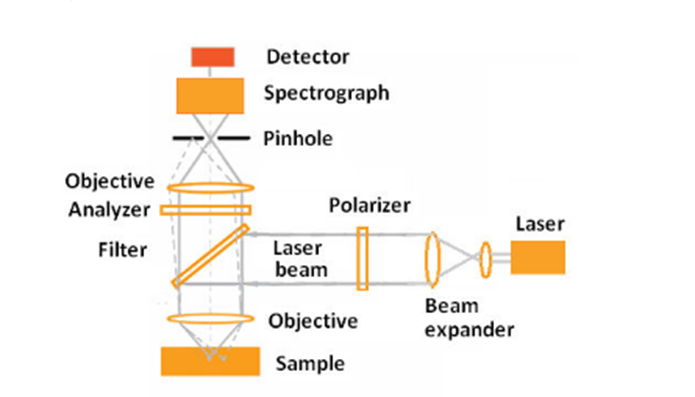
The core of this technology lies in combining several key optical components:

1. Laser Excitation : A monochromatic laser (e.g., 532 nm, 633 nm, or 785 nm) is used to illuminate a precise spot on the sample. The high-intensity laser light enhances the inherently weak Raman scattering signals.

2. Objective Lens: The objective lens focuses the laser onto the sample and collects the back-scattered light. Its numerical aperture (NA) plays a vital role in determining lateral and axial resolution. For example, with a 514.5 nm laser and an NA of 0.9, lateral resolution can reach ~360 nm.

3. Rejection Filters : To isolate the Raman signal, Rayleigh scattered light (which carries no chemical information) is removed using edge or notch filters. SOL Instruments, for example, offers BragGrate notch filters with bandwidths <10 cm⁻¹, allowing ultra-low-frequency Raman analysis.

4. Confocal Pinhole : A confocal pinhole eliminates out-of-focus light, ensuring only in-focus Raman signals are detected. This spatial filtering improves both image contrast and axial (Z-axis) resolution, which is critical for 3D Raman mapping.

5. Spectrograph and Detectors: The Raman scattered light is dispersed by a diffraction grating inside a spectrograph and captured by a CCD or EMCCD detector. High-resolution gratings (e.g., 1800 lines/mm or echelle gratings) allow the detection of subtle chemical differences, while EMCCDs enable fast, sensitive data collection.

Image Credit

Advanced Capabilities: Confotec® Raman Systems

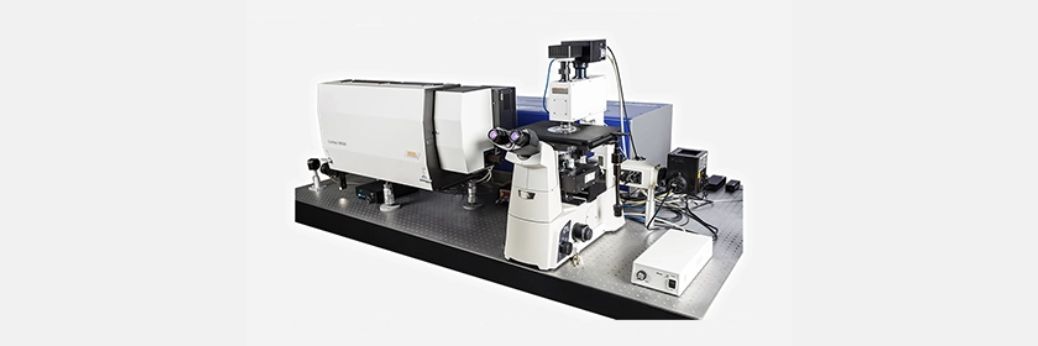
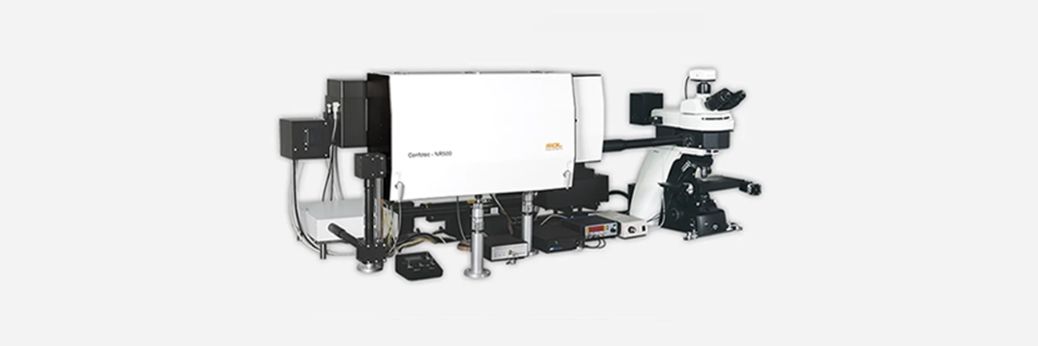
SOL Instruments’ Confotec® series, such as the NR500, exemplify state-of-the-art Confocal Raman systems. These instruments can be configured with up to five laser lines and ultra-low frequency Raman filters, enabling the detection of Stokes and anti-Stokes signals down to 10 cm⁻¹—ideal for probing phonon modes, carbon nanotubes, and 2D materials like graphene. They also feature:

  • 3D scanning capabilities
  • Temperature-controlled stages (from -196°C to 1000°C)
  • High spectral resolution (FWHM as low as 0.017 nm with echelle gratings)
  • Volume Bragg Gratings (VBGs) for stable, high-throughput filtering

Applications of Confocal Raman Microscopy

The versatility of Confocal Raman Microscopy allows it to be used in an impressive range of disciplines:

Materials Science

  • Stress mapping in silicon wafers
  • Polymorphic analysis of pharmaceuticals

Nanotechnology

  • Characterization of carbon nanotubes (RBM, D-band, G-band)
  • Graphene layer identification via C-band

 Life Sciences

  • Protein structure analysis (e.g., keratin in nails)
  • Cell and tissue biochemistry
  • Degree of crystallinity in cellulose

Semiconductor and Electronics

  • Analysis of Li-ion battery degradation
  • Mapping semiconductor heterostructures (Si-Ge, GaN, QDs)

Forensics & Document Analysis

  • Ink discrimination
  • Sequence of handwritten layers
  • Pigment analysis through packaging

Advantages of Confocal Raman Microscopy

  • Label-Free and Non-Destructive
  • High Spatial and Spectral Resolution
  • 3D Chemical Mapping
  • Minimal Sample Prep
  • Simultaneous Imaging and Spectroscopy

Key Insights from Confocal Raman Microscopy

Confocal Raman Microscopy stands at the intersection of chemical insight and optical precision. Whether you’re investigating strain in semiconductors, crystal structures, or molecular compositions deep within a material, this technique offers a depth of information unmatched by traditional spectroscopy or microscopy alone.

If you’re looking for a system that combines sensitivity, resolution, and flexibility—SOL Instruments’ Confotec® series should be on your radar.

Looking to Upgrade Your Lab’s Imaging Capabilities?

Contact Barnett Technical Services to learn more about Confocal Raman Microscopes and how they can be configured for your research or industrial application.

Micromanipulator Price: What to Expect and How to Choose the Right System

If you’re involved in precision testing, micro-sample handling, or semiconductor analysis, chances are you’ve encountered the need for a micromanipulator. These highly specialized instruments are essential for tasks that require sub-micron accuracy—whether it’s electrical probing, particle manipulation, or targeted sample preparation.

But one of the most common questions we hear is:

“How much does a micromanipulator cost?”

The answer depends on several variables. In this blog, we’ll explore the typical micromanipulator price range, what drives the cost, and how to evaluate systems based on your application and budget.

What Is a Micromanipulator?

A micromanipulator is a precision device used to move or position tools—such as probes, electrodes, or pipettes—with high accuracy under a microscope. They’re used in industries such as:

  • Semiconductor and electronics testing
  • Materials science
  • Life sciences and biomedical research
  • Geology and mineral analysis
  • Photonics and optics assembly

Systems range from simple manual stages to fully automated, computer-controlled micromanipulation platforms.

Micromanipulator Price Range

Here’s a general estimate of micromanipulator pricing based on system complexity:

System TypeTypical Price Range (USD)Use Case
Manual Micromanipulator$2,000 – $6,000Basic micro-positioning, single-probe tasks
Motorized Micromanipulator$8,000 – $15,000Precision control for applications like electrical probing
Integrated Micromanipulator System$20,000 – $60,000+Automated systems with microscope integration and software control

Note: These are ballpark figures. custom configurations, accessories, and software licenses can add to the base cost.

Factors That Influence Micromanipulator Price

1. Control Type: Manual vs. Motorized: Manual micromanipulators are the most affordable but offer limited precision and repeatability. Motorized systems—like MicroSupport’s Quick Pro or Axis Pro—offer motorized control and are ideal for tasks requiring micron or sub-micron accuracy.

2. Number of Manipulator Arms: Basic setups may include one or two arms. Systems used for electrical probing or complex sample handling may require more arms, increasing the system’s cost.

3. Integrated Microscopy: Standalone manipulators can be mounted to existing microscopes, but integrated systems like the MicroSupport Axis Pro include high-resolution zoom optics and real-time imaging, significantly enhancing performance—and pricing.

4. Software & Automation: Advanced systems offer PC-based control, automated movement, and programmable routines. These features improve usability and reproducibility but add to the system cost.

5. Applications and Accessories: Micromanipulators tailored for electrical probing, sample collection, or ex-situ lift-out will require specialized tips, stages, and environment controls. Customization for SEM integration, cryo stages, or vibration isolation also influences price.

Micromanipulators from MicroSupport

Barnett Technical Services offers a full range of MicroSupport micromanipulators, including:

  • Quick Pro – Standalone, motorized arms for existing microscopes
  • Axis Pro – Integrated system with microscope and PC control
  • Collection Pro – For automated particle sorting and retrieval
  • Electrical Probing Systems – Configurable up to four arms

Each solution can be customized based on your lab needs.

Is a High-End Micromanipulator Worth It?

Investing in a high-precision micromanipulator system pays off if your work involves:

  • Repetitive tasks requiring accuracy and reproducibility
  • Sub-micron positioning of fragile samples or probes
  • Multi-probe electrical testing or semiconductor device analysis
  • Handling particles for failure analysis, QA/QC, or research

The return on investment comes in the form of time savings, increased accuracy, and minimized sample damage.

Request a Quote

Interested in learning more about micromanipulator pricing for your specific application?
Contact Barnett Technical Services for expert guidance and a customized quote.

We’ll help you choose the right configuration to meet your technical requirements and budget.

Barnett Technical Services Launches New Testing Services

Barnett Technical Services (BTS) is excited to introduce a new range of services designed to meet the needs of industries and researchers. We have expanded our expertise to offer Thermal Testing, Raman Microscopy, Optical Characterization, and Microsampling. These services are created to help you get more accurate results and make better decisions in your projects, whether it’s for material analysis, quality control, or product development.

Advanced Thermal Testing Services

Understanding thermal properties is essential for material innovation and product development. BTS offers thermal testing services utilizing state-of-the-art Hot Disk® thermal analysis instruments, available either on-site or through collaboration with the manufacturer. Our capabilities cover a wide range of thermal conductivities from 0.005 to 1800 W/mK and temperatures spanning from below 0ºC to as high as 1000ºC.

Our services include:

  • Thermal Conductivity Testing
  • Specific Heat Capacity Testing
  • Anisotropy Measurements to evaluate thermal conductivity in multiple directions

Using the Transient Plane Source (TPS) method and adhering to ISO 22007-2 standards, we deliver precise and reliable results. Our experienced team stands ready to assist with your thermal analysis requirements, helping you better understand material behavior under varied environmental conditions.

High-Resolution Raman Microscopy Analysis

Barnett Technical Services offers Confocal Raman Microscopy solutions with the advanced SOL Instruments MR350 Raman microscope. Utilizing 532 nm and 785 nm excitation wavelengths, our systems deliver precise and detailed chemical and structural material analysis.

Our Raman microscopy services support industries including:

  • Semiconductors
  • Pharmaceuticals
  • Chemicals
  • Polymers
  • Nanotechnology
  • Food and Beverage

We specialize in identifying and analyzing sample compositions and defects, providing critical insights for research and quality assurance. Whether investigating microscopic structures or detecting contamination, BTS ensures the delivery of accurate, actionable data.

Optical Characterization: Birefringence and Surface Stress Analysis

In fields where transparency and structural integrity are crucial, understanding material stresses is vital. BTS now offers Optical Characterization solutions that specialize in:

  • Birefringence Measurements to assess internal strain within transparent materials
  • Surface Stress Measurements to determine compressive stress (CS) and depth of layer (DOL) in surface-strengthened glass

With the use of advanced optical systems, our non-destructive evaluations help identify stress-related issues early, preventing potential product failures and ensuring long-term material performance.

Precision Microsampling Services

Handling microscopic samples requires exceptional precision and contamination prevention. BTS delivers specialized Microsampling services utilizing MicroSupport’s innovative micromanipulation technology.

Key features include:

  • High-precision positioning and movement of microscopic particles
  • Applications in contamination analysis and failure investigation
  • Utilization of the MicroSupport Axis Pro Benchtop Micromanipulator, featuring a zoom microscope, motorized arms, and PC-based control
  • Capability to manipulate particles as small as 1 µm, with options for surface material removal and delicate sample collection

Our microsampling solutions ensure accurate handling of sensitive samples, supporting industries in achieving reproducible results with minimal contamination risk.

Specialized Services to Support Your Needs 

Barnett Technical Services is focused on providing reliable support to researchers, engineers, and industry professionals. With our expanded range of services, we are here to help you with the tools and expertise necessary to meet the challenges in your work.

Whether you need testing for thermal properties, Raman microscopy analysis, optical stress measurements, or precise microsampling, we offer services that are designed to fit your specific needs and provide accurate results.

Visit our Services page to learn more about how we can assist with your research, quality control, and production. If you have questions or need further details, feel free to contact our team or complete a sample form. We’re ready to help.