
Exploring Motorized Micromanipulators: Advancing Precision in the Microscopic World
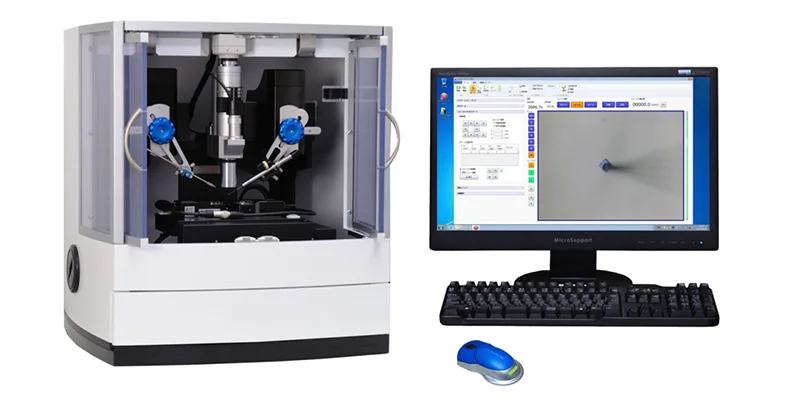
Modern microscopy extends far beyond observation. Researchers and engineers increasingly need to interact with samples at microscopic scales positioning them, collecting them, testing them, or assembling them with micrometer-level precision. This requirement has transformed the micromanipulator from a specialized research tool into an essential component of contemporary laboratories.
A motorized micromanipulator enables researchers to manipulate microscopic samples, tools, and components with precision and consistency that manual operation cannot match. By replacing hand control with electronic, motor-driven positioning, motorized micromanipulators deliver the accuracy, repeatability, and automation capabilities that modern research and industrial quality control demand.
This guide explores motorized micromanipulators in depth what they are, how they work, why they matter, and which applications benefit most from motorized precision.
What Is a Motorized Micromanipulator?
A motorized micromanipulator is a precision instrument that uses electric motors to enable remote, controlled positioning and movement of microscopic samples, tools, or components under a microscope. Unlike fully manual systems where an operator controls movement by hand, a motorized micromanipulator translates PC mouse input (or programmed commands) into motor-driven positioning of the stage and manipulation arms.
What Makes a Micromanipulator “Motorized”?
The key feature of a motorized micromanipulator is the replacement of mechanical hand control with electric motor actuation. While purely manual micromanipulators rely on operator hand steadiness and mechanical knobs, a motorized system interprets mouse movement and translates it into controlled motor movement of the stage and arms.
This motorized approach addresses the main limitations of manual systems:
- Hand tremor and drift (operator fatigue introduces positional variation)
- Inconsistent movement speed (the operator must consciously maintain uniform rates)
- Limited repeatability (no two manual manipulations are identical)
- Difficulty executing multi-step sequences reliably by hand
Basic Components and Control
A motorized micromanipulator system typically includes a motorized XYZ stage, one or more motorized manipulation arms, a zoom or infinity-corrected optical system, and control electronics that translate PC mouse input into motor drive signals.
Moving the mouse translates directly into motorized arm or stage movement in the corresponding direction an intuitive interface that avoids the learning curve of traditional joystick or knob-based manual systems.
MicroSupport Solutions for Motorized Micromanipulation
Barnett Technical Services is a distributor of MicroSupport, a Japanese manufacturer founded in 2006 specializing in micromanipulators and related accessories for industries requiring stringent quality control or research into advanced materials, including high-molecular compounds, petrochemicals, electronics, and semiconductors. Our motorized product line addresses different laboratory configurations and performance requirements:
- Axis Pro: Benchtop micromanipulator with an integrated zoom microscope, a motorized XYZ stage, and two motorized arms, all controlled through a PC mouse interface. Well suited to laboratories building a new microsampling setup, and capable of moving particles as small as 1 µm.
- AxisPro API: The highest-performing model in the Axis Pro line, combining infinity-corrected optics with a hybrid zoom system spanning 30x–10,000x magnification. Because the focal point doesn’t shift when switching objective lenses, left- and right-arm operability is significantly improved. AxisPro API is built for stable sampling of objects as small as 5 µm.
AxisPro Custom Specification: A floor-standing configuration of the Axis Pro platform built around an integrated vibration isolation table and an 8-inch motorized XY stage, for handling workpieces beyond standard benchtop capacity. Custom stage designs are available to match the size and shape of specific workpieces
How Does a Motorized Micromanipulator Work?
Motorized Axes and Positioning
A motorized micromanipulator controls movement along the X (left-right), Y (forward-backward), and Z (up-down) axes of both the stage and the manipulation arms. The Axis Pro platform coordinates its motorized stage and two motorized arms simultaneously for fluid 3D positioning of samples or tools. Additional rotation and tilt axes are available on AxisPro API through optional motorized or mechanical accessories, such as electric rotating stages and two-axis rotating or tilting stages.
User-Controlled Motorized Movement
Operators control motorized positioning entirely through a PC mouse interface no joystick or mechanical knobs required. Mouse movement corresponds directly to motorized arm or stage movement, making the systems approachable for new users while still supporting fine, deliberate positioning for demanding sampling work.
Positioning Under Magnification
AxisPro API’s infinity-corrected optical system maintains a fixed focal point across its full 30x–10,000x zoom range. Lower magnification supports broad field awareness during an initial approach; as the operator zooms in for detailed positioning, the same motorized control remains smooth and predictable, without having to re-find focus each time the lens changes.
Tool and Sample Interaction
The physical interaction between a motorized-positioned tool and a sample varies by application. Axis Pro’s motorized arms can hold a range of tools probes, knives, scrapers, vacuum absorption tools for picking up grains, and electrical probes selected to match the task. In particle isolation and microsampling work, the operator watches the tool-sample interaction in real time under the microscope and makes fine motorized adjustments in response to what’s visible on screen.
Applications of Motorized Micromanipulators
Barnett/MicroSupport micromanipulators are used across several established application areas:
Particle Isolation and Failure Analysis: Isolating and examining specific microscopic particles or components is central to failure analysis work. Motorized precision supports micro-sample handling, targeted microfabrication, and detailed examination of failed components without disturbing surrounding material.
Materials Science: Handling microscopic materials, micro-particles, or microscopic structures for analysis or assembly, and positioning small components during fabrication processes.
Microsampling and Ex Situ Lift-Out: Axis Pro and AxisPro API both support precise microsampling, including ex situ lift-out of FIB-prepared foils for TEM analysis and other targeted sample-extraction workflows.
Diamond Anvil Cell (DAC) Loading: Axis Pro’s motorized precision simplifies loading samples into a diamond anvil cell for high-pressure research, where precise alignment between diamond surfaces is essential.
Glovebox-Compatible Operation: Axis Pro’s hardware configuration allows the system to operate inside a glovebox, with the operator controlling it from outside useful for microsampling in an inert or controlled atmosphere.
Photonics and Optics: Precise alignment of optical fibers or lenses in photonics research or telecommunications applications.
Precision Microassembly: Assembling miniature components or devices where manual hand control isn’t precise or repeatable enough.
Benefits of Motorized Micromanipulation
Controlled Positioning: Motorized systems give the operator control over where a sample or tool goes, without the mechanical variability of a hand-turned knob.
Repeatability: Once a motorized positioning approach is dialed in, it can be reproduced consistently something manual manipulation struggles to match across many cycles, which matters for high-volume particle sorting, electrical probing, and other repetitive microsampling work.
Reduced Operator Fatigue and Hand-Tremor Effects: Physiological hand tremor becomes especially noticeable at high magnification. Motorized control removes tremor from the equation, letting positioning be limited by the optical system rather than by hand steadiness.
Gentler Handling of Delicate Samples: Controlled, motorized approach speeds help avoid the mechanical shock that can damage fragile samples during manual positioning.
How to Choose a Motorized Micromanipulator
Selecting the right system means matching its configuration to your application:
- Sample size and workspace: Axis Pro and AxisPro API suit benchtop, small-to-medium samples. AxisPro Large Stage’s 8-inch motorized XY stage and vibration isolation table are built for larger workpieces.
- Required sampling precision: AxisPro API is specified for stable sampling of objects as small as 5 µm; Axis Pro can move particles as small as 1 µm. Match this to what your application actually requires.
- Magnification range: AxisPro API’s infinity-corrected optics cover 30x–10,000x with a fixed focal point across lens changes useful if you need to move fluidly between broad field-of-view and fine detail.
- Tool and accessory compatibility: Confirm the arm attachments (probes, knives, vacuum tools, electric micro tweezers, rotating/tilting stages) needed for your specific workflow.
- Environment: If you need to work inside a glovebox or under a controlled atmosphere, Axis Pro’s glovebox-compatible configuration is worth discussing with our team.
Frequently Asked Questions About Motorized Micromanipulators
What is a motorized micromanipulator?
A precision instrument that uses electric motors, controlled through a PC mouse interface, to position microscopic samples or tools under a microscope with far greater consistency than manual operation.
What are motorized micromanipulators used for?
Particle isolation and failure analysis, microsampling, ex situ FIB lift-out for TEM, diamond anvil cell loading, glovebox-based sample handling, fiber optic and photonics alignment, and precision microassembly.
How does a motorized micromanipulator work?
It translates PC mouse movement into motor-driven positioning of a stage and one or more manipulation arms along the X, Y, and Z axes, letting the operator watch the tool-sample interaction under the microscope in real time.
How do I choose a motorized micromanipulator?
Consider workspace size, required sampling precision, magnification range, tool and accessory compatibility, and any special environmental requirements (such as glovebox operation). Our team can help match a configuration to your specific application.
What is the price of a motorized micromanipulator?
Pricing varies by configuration and accessories. Contact Barnett Technical Services for pricing specific to your application.