
Shack-Hartmann Sensors for Wavefront Analysis in Optical Testing Applications
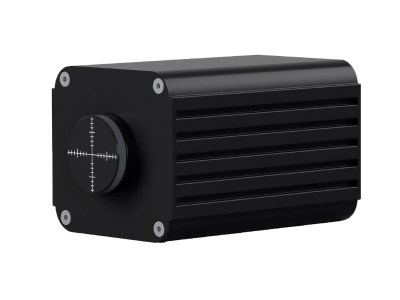
Wavefront quality plays an important role in the performance of optical systems used in imaging, laser processing, research, semiconductor manufacturing, and other precision applications. Optical components, alignment errors, refractive-index variations, and system configuration can introduce changes in the wavefront as light passes through or reflects from an optical system. Measuring these distortions allows engineers to evaluate optical performance, identify aberrations, and assess whether components or assembled systems meet specified optical requirements.
Wavefront analysis allows engineers to measure these distortions and identify optical aberrations such as defocus, astigmatism, coma, and spherical aberration, as well as more complex wavefront errors that may affect image quality, beam propagation, or overall system performance.
This post explains how a Shack-Hartmann sensor works, how wavefront analyzers based on Shack-Hartmann technology measure wavefront distortions, the key advantages and optical testing applications of this approach, and how it compares with other wavefront measurement methods.
What Is a Shack-Hartmann Sensor?
A Shack-Hartmann sensor is a wavefront sensing device used to measure distortions and variations in an optical wavefront. It typically consists of a two-dimensional array of small lenses, known as lenslets, and an imaging detector placed in the focal plane of the lenslet array or at a known distance from it.
Each lenslet samples a small portion of the incoming wavefront and focuses the light onto the detector. The resulting focal-spot pattern provides the information needed to determine local changes in wavefront slope relative to a reference measurement.
The measurement process generally involves:
- Wavefront Sampling: Each lenslet samples a small region of the incoming wavefront and forms a focal spot on the detector.
- Reference Comparison: For a reference wavefront, the focal spots occur at known positions. Local changes in wavefront slope cause the corresponding spots to shift from these reference positions.
- Slope Measurement: The displacement of each spot in two orthogonal directions is related to the local wavefront slope within the corresponding lenslet subaperture.
- Wavefront Reconstruction: A wavefront analyzer uses the measured local slopes to reconstruct the wavefront shape or wavefront error and quantify aberrations such as defocus, astigmatism, coma, and spherical aberration.
How a Wavefront Analyzer Uses Shack-Hartmann Technology
A wavefront analyzer using Shack-Hartmann technology converts the focal-spot pattern captured by the detector into quantitative information about the incoming wavefront. Rather than measuring optical phase directly, the system determines local wavefront slopes from the displacement of individual focal spots and uses these measurements to reconstruct the wavefront.
The analysis typically involves the following steps:
- Capture the Spot Pattern: The detector records the array of focal spots produced by the lenslet array. Each spot corresponds to a sampled region of the incoming wavefront.
- Determine Spot Displacement: The analyzer determines the position, typically the centroid, of each focal spot and compares it with a calibrated reference position. A displacement indicates a local change in the direction of propagation or wavefront slope.
- Calculate Local Wavefront Slopes: The spot displacement, together with the lenslet focal length or effective lenslet-to-detector distance, is used to determine the local wavefront slope in two orthogonal directions.
- Reconstruct the Wavefront: Reconstruction algorithms combine the measured local slopes across the sensor aperture to estimate the wavefront. The reconstructed wavefront can then be analyzed to determine characteristics such as wavefront error and optical aberrations.
- Analyze Dynamic Changes: When the sensor and processing system provide sufficient acquisition and computation speed, repeated measurements can track changes in the wavefront over time. This capability is useful for applications involving changing optical conditions or active wavefront correction.
As Shack-Hartmann measurements are obtained from spot positions rather than an interference-fringe pattern, wavefront analyzers can derive quantitative wavefront and aberration information from the measured spot displacements without requiring direct measurement of optical phase.
Key Advantages of Shack-Hartmann Sensors
Shack-Hartmann sensors are widely used in optical testing because they can provide quantitative wavefront measurements across a broad range of optical systems. Their measurement approach offers the following practical advantages for laboratory, manufacturing, and research environments.
- High-Speed Measurement: A Shack-Hartmann sensor acquires wavefront information from a single captured spot pattern rather than requiring sequential scanning. Combined with modern detectors and processing algorithms, this can enable rapid wavefront measurement and support applications involving changing optical conditions or dynamic optical systems.
- Simultaneous Measurement Across the Aperture: The lenslet array samples many regions of the wavefront at the same time, enabling the system to characterize wavefront behavior across the entire measured aperture from a single acquisition. This capability is valuable for evaluating spatially varying wavefront errors, optical aberrations, and beam characteristics.
- Suitable for Dynamic Optical Systems: As wavefront data can be acquired and processed rapidly, Shack-Hartmann sensors are commonly used in adaptive optics, laser diagnostics, and other applications where wavefront conditions change over time. They can support real-time or near-real-time measurement when the sensor and processing architecture are designed for the required update rate.
- No Interference Fringe Requirement: Unlike interferometric methods that rely on analyzing interference fringes, Shack-Hartmann sensors determine wavefront information from focal-spot positions. This can simplify measurements in applications where maintaining a stable interference pattern is challenging and can reduce the impact of certain vibration or environmental constraints compared with some interferometric configurations.
- Broad Applicability: Shack-Hartmann technology can be used for laser beam characterization, optical component testing, optical system alignment, adaptive optics, ophthalmic measurements, and other wavefront sensing applications. The same fundamental measurement principle can be adapted to different wavefront ranges, apertures, and optical configurations, subject to the sensor design and measurement requirements.
Optical Testing Applications of Shack-Hartmann Sensors
Shack-Hartmann sensors are used in optical testing environments where engineers need quantitative information about the performance of beams, components, or complete optical systems. Common applications include:
- Laser Beam Characterization: Engineers can use Shack-Hartmann measurements to evaluate laser wavefront quality, beam collimation, wavefront curvature, and wavefront aberrations. When combined with appropriate intensity measurements and analysis, the data can also support evaluation of additional laser beam parameters.
- Lens and Optical Component Testing: Shack-Hartmann sensors can evaluate the optical performance of lenses, objectives, mirrors, and assembled optical systems in suitable transmission or reflection test configurations. These measurements can help verify component performance, investigate mounting-induced changes, and support alignment and quality-control activities.
- Adaptive Optics Systems: Shack-Hartmann sensors are commonly used in adaptive optics systems to measure wavefront distortions. The measurement data helps the control system adjust a corrective element, such as a deformable mirror, to reduce these distortions. Applications include astronomical imaging, microscopy, laser systems, and free-space optical communication.
- Semiconductor and Photonics Applications: In semiconductor and photonics environments, Shack-Hartmann sensing can support objective-lens testing, laser characterization, and alignment of precision optical systems. Sensors designed for the required wavelength range can also be applied to wavefront measurement and optical metrology at ultraviolet and other wavelengths used in specialized manufacturing and research systems.
Comparing Shack-Hartmann Sensors with Other Wavefront Methods
Shack-Hartmann sensing is one of several techniques used for wavefront measurement. Interferometric and lateral shearing methods can also provide quantitative wavefront information, but they differ in their measurement principles and test requirements. Here is a comparison:
| Method | How It Works | Key Characteristics | Commonly Suited For |
| Shack-Hartmann Sensing | Measures local wavefront slopes from focal-spot displacements produced by a lenslet array. | Does not rely on interference fringes; can support single-frame acquisition; spatial sampling is determined primarily by the lenslet array and detector characteristics. | Laser characterization, optical testing, alignment, and adaptive optics. |
| Conventional Interferometry | Compares a test wavefront with a reference wavefront and analyzes the resulting interference pattern. | Offers high accuracy and spatial resolution; many configurations require a suitable reference and stable test conditions. | Precision testing of optical surfaces, components, and systems. |
| Lateral Shearing Interferometry | Laterally displaced copies of the same wavefront interfere, providing information related to spatial wavefront gradients. | Self-referencing, so a separate reference wavefront is not required. Performance and measurement range depend on the specific shearing implementation and optical configuration. | Wavefront testing where a self-referencing interferometric method is beneficial. |
No single method is suitable for every optical test. Engineers should consider factors such as required measurement accuracy, spatial resolution, dynamic range, wavelength, source characteristics, acquisition speed, and environmental conditions when selecting a wavefront measurement method.
Explore Wavefront Analysis Solutions from Barnett Technical Services
Shack-Hartmann sensing is an established approach to wavefront analysis, but it is one of several technologies available for evaluating wavefront quality. The right method depends on the optical system, measurement requirements, and application.
For applications requiring wavefront and phase characterization, Barnett Technical Services offers advanced solutions, including the Wooptix wavefront sensors that utilize proprietary Wavefront Phase Imaging® technology. Barnett also provides a broader selection of optical metrology instruments for evaluating optical components, surfaces, materials, and systems.
Explore Barnett Technical Services’ Wavefront Sensors and Optical Metrology Instruments, or contact its technical team to discuss measurement requirements for your application.