
How Axis Pro Enables Precise and Repeatable Surface Sample Preparation?
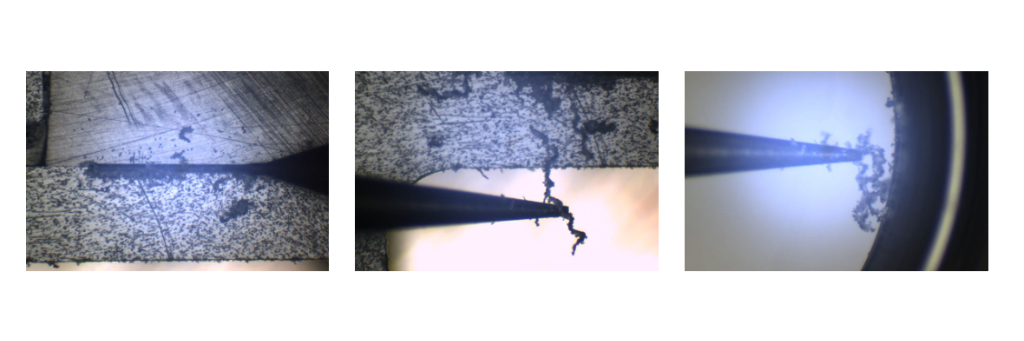
Image Credit: https://www.microsupport.co.jp/
Precise sample preparation is essential in materials analysis because it directly influences the accuracy of techniques such as FT-IR microscopy, Raman microscopy, XRD, and stable isotope analysis. Even advanced instrumentation like a stable isotope analyzer relies on representative, contamination-free samples for reliable results.
Surface sampling, however, is challenging. Manual scraping or cutting with blades or scalpels is highly operator-dependent, often causing inconsistent depth control, uneven material removal, and cross-contamination between layers. These issues reduce reproducibility, particularly in heterogeneous or layered materials.
To improve reliability, there is a clear need for controlled and repeatable material removal methods that ensure consistency across users and applications such as failure analysis and materials characterization. Semi-automated surface cutting systems like Axis Pro address these challenges by combining programmable motion control with precision mechanics. This post explores how Axis Pro enables precise and repeatable surface cutting (scraping) of designated areas, improving sample preparation accuracy for analytical techniques such as FT-IR, Raman, XRD, and stable isotope analysis.
Challenges in Manual Surface Scraping
Manual scraping appears straightforward – the area for modification is identified, a blade or tool is used to remove material, and the material is corrected. However, practically, this process may not be that smooth. Here are the real challenges in manual surface scraping.
- Boundary Definition Limitations: Precisely defining the cutting area under microscopic conditions is challenging in a manual operation.
- Positional Drift: Freehand blade control can introduce lateral movement, reducing sampling accuracy and repeatability.
- Inconsistent Scraping Depth: Variations in operator-applied pressure often result in non-uniform material removal across the target region.
- Sample Non-Uniformity: Uneven scraping can compromise sample consistency and negatively impact downstream analytical reliability.
- Hidden Analytical Variability: Surface inconsistencies may not be visually detectable but become evident in analytical test data.
- Cross-Contamination Risk: Imprecise scraping can disturb adjacent regions and unintentionally introduce foreign material into the sample.
- Surface Chemistry Alteration: Friction-generated heat during scraping may modify the chemical characteristics of sensitive surfaces.
- Substrate Damage: Manual scraping can physically deform delicate substrates, particularly in electronics and battery material analysis.
- Operator Dependency: Results significantly vary among technicians, even when processing identical sample types.
- Poor Reproducibility: Manual methods limit process standardization, making cross-study comparisons less reliable.
- Inherent Process Constraints: These challenges arise from the limitations of manual techniques rather than operator performance.
To overcome these challenges, a controlled and semi-automated surface preparation system is essential for achieving precision, repeatability, and sample integrity.
What Semi-Automated Surface Cutting Actually Does
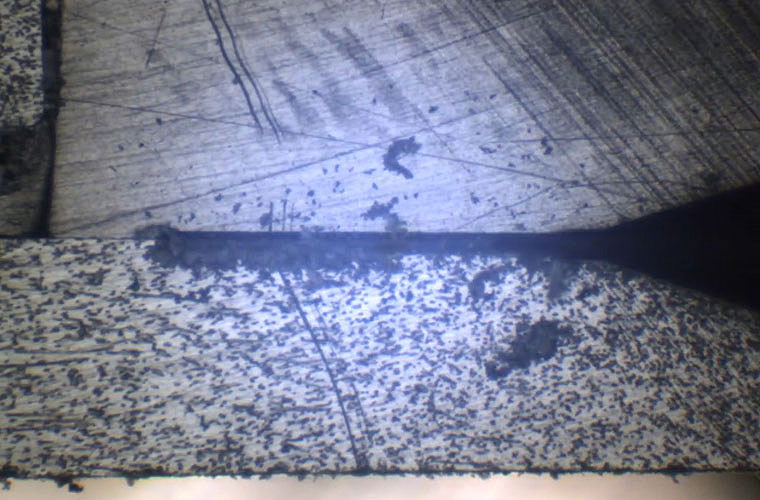
Image Credit: https://www.microsupport.co.jp/
Semi-automated surface cutting focuses on removing material from a designated surface area in a controlled and well-defined manner. The primary application goal is to prepare high-quality samples for detailed analytical evaluation, ensuring that the collected material accurately represents the region of interest.
To achieve this, the process requires controlled, precise, and repeatable scraping of surface layers. Unlike manual methods that rely on operator skill and visual judgment, semi-automated systems use a programmable interface to define key parameters such as cutting boundaries, tool path, movement speed, and depth before the operation begins.
The operator remains involved by selecting the target area and setting the required conditions, but the actual cutting sequence is executed by the system with consistent mechanical accuracy. This hybrid approach ensures repeatability and reduces variability between samples and users.
Such controlled sample preparation is particularly valuable in applications like sample preparation for subsequent thermal analysis of lithium-ion battery materials, where uniform sample mass and consistency directly influence the accuracy of measurements such as differential scanning calorimetry and related techniques.
To achieve this level of precision and repeatability, the process is driven by a dedicated control program like Axis Pro that governs how surface cutting is executed in practice.
Axis Pro Control Program: How It Manages Surface Cutting
The Axis Pro control program, developed by MicroSupport, enables semi-automated surface cutting operations along with precision and repeatability. Here’s what it offers.
- Structured Parameter Definition Interface: It provides a structured interface for defining movement parameters before the tool engages the surface.
- User-Defined Cutting Parameters: Operators can specify the target area coordinates, define the tool path geometry, set cutting depth increments, and control movement speed.
- Protocol Storage and Recall: These parameters are saved in the memory and can be recalled for subsequent runs, which is particularly valuable in research environments where the same sample preparation protocol needs to be applied consistently across a batch.
- Decoupled Decision and Execution Framework: The system reduces manual error while still involving the operator and automating the mechanical execution. The operator makes the decisions; the control program executes them precisely. So, the analytical quality of sample preparation depends on the operator’s scientific judgment.
- Microscopy Integration for Visual Validation: Axis Pro’s microscopy system means the operator can visually confirm the target area and boundary definition before initiating the cutting sequence. This helps determine whether the tool is positioned correctly.
While the control program defines and executes the cutting parameters, the effectiveness of surface scraping ultimately depends on the choice of tool used for material removal.
How the Process Works: Axis Pro-Enabled Semi-Automated Surface Preparation Workflow
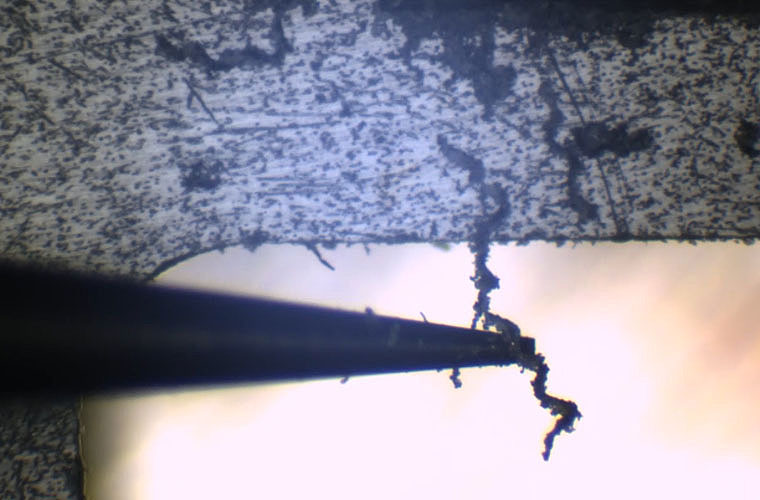
Image Credit: https://www.microsupport.co.jp/
- Target Area Identification (Microscopy-Assisted): The operator inspects the sample surface under a microscope to precisely locate the region of interest for material removal. Microscopy-assisted inspection provides high-resolution visual confirmation and spatial accuracy prior to processing.
- Defining the Cutting Region (Axis Pro Interface): The selected region is geometrically defined within the Axis Pro control interface by assigning boundary coordinates, establishing a controlled and reproducible scraping perimeter.
- Parameter Configuration (Path, Depth, and Speed): Movement parameters are configured, including tool path geometry, depth control settings, and feed speed. These parameters can be stored and reused to maintain consistency across identical sample types and analytical conditions.
- Semi-Automated Material Removal (System Execution): The Axis Pro system executes the predefined cutting sequence, while Milling Pro tooling performs controlled, micro-scale material removal within the specified spatial and depth constraints.
- Sample Retrieval and Analytical Transfer: The extracted material is collected post-processing and transferred to the appropriate analytical platform, such as FT-IR spectroscopy, Raman spectroscopy/microscopy, XRD analysis, or thermal characterization systems.
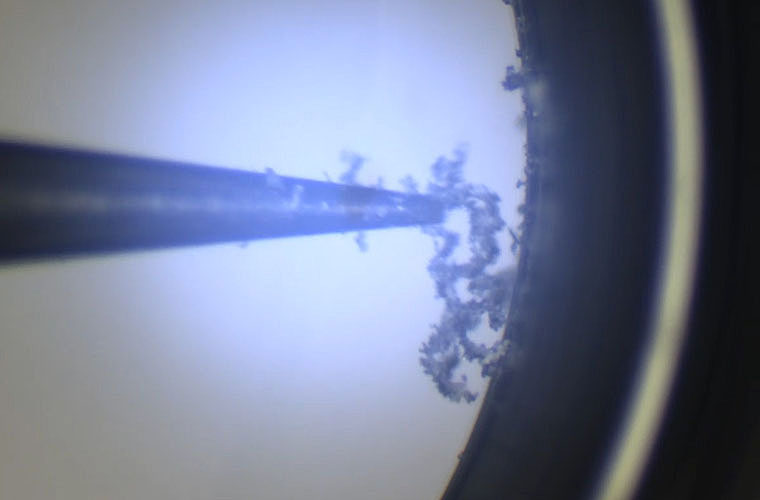
Image Credit: https://www.microsupport.co.jp/
6.Traceable and Reproducible Workflow Documentation: Operational parameters can be documented to support workflow traceability and reproducibility, which is particularly valuable in regulated or quality-controlled research environments.
System Capabilities for Precision Surface Preparation
Several system capabilities are particularly valuable for research and analytical sample preparation applications.
- Programmable and Repeatable Tool Movement: Enables predefined cutting parameters to be executed consistently across multiple samples, supporting standardized batch processing without reconfiguration.
- High Positional Accuracy: Maintains precise tool positioning during operation, minimizing boundary deviation and preserving the integrity of the defined cutting area.
- Stable Operation for Consistent Results: Provides mechanically stable cutting conditions that support consistent depth control and uniform material removal across the scraping region.
- Microscopy-Assisted Targeting and Alignment: Supports microscopy-assisted alignment and region selection, enabling accurate definition of the cutting area prior to material removal.
Together, these capabilities improve the consistency, precision, and reproducibility of sample preparation outcomes compared to manual surface scraping methods.
Integration with FT-IR and XRD Analysis
The value of precise sample preparation becomes fully apparent when you consider what happens downstream.
- FT-IR/Raman Microscopy (Chemical Analysis): FT-IR or Raman microscopy benefits when clean, representative, and spatially consistent samples allow for accurate molecular characterization. Non-uniform or mixed-depth specimens can introduce overlapping absorption features and spectral contributions from unintended regions, complicating interpretation. Controlled surface scraping helps ensure that the resulting spectra accurately represent the targeted analysis area.
- XRD (Crystallographic Structure Analysis): X-ray diffraction requires high sample homogeneity to generate reliable diffraction patterns. Material mixing from different depths or adjacent zones can contribute to peak broadening, reduced resolution, or unintended diffraction features that affect phase identification. Uniform surface removal enables cleaner diffraction profiles and improved structural accuracy.
- Improved Reliability Through Precision Preparation: Consistent, geometry-controlled scraping improves the analytical reliability of FT-IR, Raman, and XRD measurements by reducing variability introduced during sample collection and preparation.
- Enhanced Sample Quality for Analytical Consistency: Uniform and representative sample preparation supports reproducible analytical measurements across multiple experiments and testing conditions.
- Dependence of Analytical Techniques on Preparation Quality: The performance of analytical techniques such as FT-IR, Raman, and XRD is strongly influenced by upstream sample preparation quality, as controlled surface cutting significantly affects data quality and interpretability.
- Process-Enabled Reproducibility: The Axis Pro system supports repeatable preparation conditions, enabling consistent production of high-quality analytical samples across repeated workflows.
Applications
Semi-automated surface cutting supports a wide range of research, analytical, and manufacturing applications that require precise and controlled material removal.
- Failure and defect analysis: The system supports targeted extraction of material from localized defect or failure regions while minimizing disturbance to surrounding areas.
- Electrical component analysis: Axis Pro supports precise material removal from specific layers of circuit boards, electronic packages, or semiconductor devices for chemical, structural, or failure analysis investigations.
- Chemical material testing: This semi-automated surface cutting collects defined quantities of chemical material from surfaces for compositional or thermal analysis.
- Printed surface and coating evaluation: The tool supports selective removal of coating layers from printed materials and engineered surfaces to evaluate properties such as adhesion, composition, and degradation behavior.
- Battery material research: Semi-automated surface cutting is valuable in lithium-ion battery research and thermal characterization workflows, where accurate extraction of electrode material is essential for reliable analytical measurements.
The common requirement across these applications is precise material removal from the intended region with controlled depth and minimal contamination from adjacent layers or surfaces.
Benefits of Semi-Automated Surface Cutting
The advantages of semi-automated surface cutting over manual methods are concrete and directly observable in analytical outcomes.
- Precision and control: The cutting operation follows predefined boundary and depth parameters throughout the sequence, reducing positional drift and edge deviation commonly associated with manual scraping.
- Reproducibility: The same parameter set produces equivalent samples across multiple runs. This is essential for comparative studies, method validation, and any research context where cross-sample consistency matters.
- Reduced operator dependency: The preparation process is less influenced by variations in operator skill or fatigue. Operators using the same parameter set can achieve more consistent sample preparation results.
- Minimal impact on surrounding material: The defined cutting boundary prevents unintended removal from adjacent regions, which protects the rest of the sample for further analysis or documentation.
- Better sample quality: The net effect of all the above is a sample that more accurately represents the intended target region, which translates directly into more reliable analytical data.
These improvements are particularly valuable in applications such as thermal characterization of lithium-ion battery materials and XRD phase analysis, where sample preparation quality significantly influences analytical reliability and data interpretation.
Improve Analytical Accuracy with Precision Surface Preparation
Surface preparation is a critical determinant of analytical reliability in material characterization workflows. The Axis Pro semi-automated surface cutting system, in combination with MillingPro tooling, provides a controlled and reproducible approach to micro-scale material removal. By enabling defined cutting regions, programmable process parameters, and consistent execution, it establishes a stable foundation for downstream analytical techniques such as FT-IR/Raman microscopy, XRD analysis, and thermal characterization. Barnett Technical Services offers the Axis Pro semi-automated surface cutting tool and is an authorized distributor for MicroSupport. Explore our product range or contact our team today to discuss your analytical sample preparation requirements.