
Characterization and Analysis of Microplastics Using Benchtop Micromanipulators and Confocal Raman Microscopy
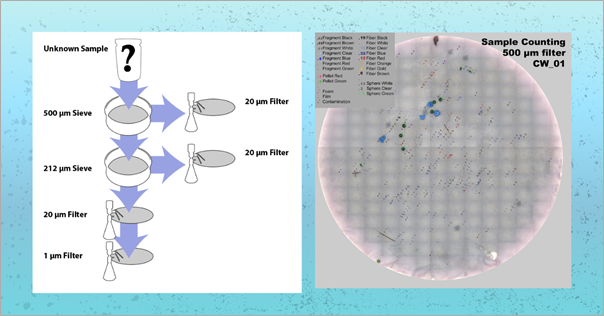
Microplastics are pervasive environmental contaminants with known effects on human health. They are found in various natural sources, making their isolation from environmental samples essential – microplastic contamination is now measurable and persistent across water, soil, air, and biological samples.. The challenge in characterization of microplastics lies not only in their small size but also in the diverse composition, shape, color, and surface chemistry. Many particles are weathered, fragmented, or chemically altered. Traditional methods, such as visual sorting under stereo microscopy, are limited by subjectivity and the inability to distinguish plastic from similar-sized particles. Effective detection requires analytical tools offering spatial resolution, chemical specificity, and throughput. Advanced techniques, such as confocal Raman Microscopy, are vital for precise polymer identification at the individual particle level, providing accurate data without assumptions. This post explains how confocal Raman microscopy is used for the accurate characterization and analysis of microplastics, highlighting its capabilities, workflow, and applications in various research areas.
Microplastic Isolation Using MicroSupport Micromanipulators
MicroSupport micromanipulators provide a precise and reliable method for isolating microplastic particles from complex sample matrices. Using fine glass needles under microscopic observation, individual particles can be selectively picked and transferred while minimizing the risk of structural or chemical alteration.
This approach is particularly useful when working with mixed samples containing organic matter, fibers, and other debris, where accurate separation is critical. The controlled manipulation allows researchers to isolate specific particles of interest, reduce contamination, and prepare them for further analysis.
By enabling careful handling and repeatable particle transfer, micromanipulators significantly improve the accuracy and efficiency of downstream techniques such as confocal Raman microscopy.
Understanding the Need for Microplastic Characterization
Microplastics are typically defined as plastic particles smaller than 5 mm. But in practical analysis, the real focus is often much smaller, down to tens of microns or even below. Hence, visual appearance alone is no longer reliable. Two particles may look identical under a microscope yet belong to entirely different polymer classes.
Polymer composition directly influences how a particle behaves in the environment. It affects degradation rate, chemical reactivity, density, and overall environmental impact. Without the polymer composition information, analysis remains surface-level.
A simple particle count can indicate the presence of contamination. But it cannot answer a more important question: what exactly are these particles made of? This is why accurate characterization and analysis of microplastics must go beyond visual inspection and focus on chemical identification.
With precise polymer-level analysis, researchers can:
- Confidently differentiate between polymer types, even at the micron-scale resolution
- Trace potential sources of contamination across environments and processes
- Study degradation pathways and long-term material behavior
- Support regulatory reporting with defensible, chemistry-based data
- Strengthen environmental assessments with detailed material insights
Analytical Challenges in Microplastic Identification
Several critical factors impact the reliability of microplastic detection and characterization using traditional methods:
- Particle Size Limitations: Many microplastics exist at sizes below 50 µm, with a significant portion below 10 µm. Detecting, isolating, and analyzing particles at this scale requires high spatial resolution and precise analytical techniques.
- Complex Sample Backgrounds: Environmental and industrial samples often contain a mixture of organic matter, minerals, and biological residues. These background materials can obscure microplastic particles or interfere with analytical signals, complicating identification.
- Weathered and Degraded Surfaces: Microplastics found in natural environments are rarely in their original form. Exposure to UV radiation, oxidation, and mechanical abrasion alters their surface chemistry, making it more difficult to match them with standard reference spectra.
- Fluorescence Interference: Organic contaminants and certain additives within plastics can fluoresce under laser illumination. This fluorescence can overwhelm or mask the Raman signal, reducing spectral clarity and making accurate identification more difficult.
- Requirement for Chemical Specificity: Reliable identification depends on obtaining a clear molecular fingerprint of each particle. Techniques that rely solely on visual or morphological characteristics introduce ambiguity and increase the risk of misclassification. In addition, many particles incorporate additives that impact the toxicity of that particle.
How Confocal Raman Microscopy Enables Microplastic Analysis
Confocal Raman Microscopy addresses the key challenges of microplastics identification at a fundamental level by combining molecular spectroscopy with high-resolution optical imaging.
The technique is based on Raman scattering. When laser light interacts with a material, a small portion of that light is scattered with a shift in energy. This shift corresponds to molecular vibrations within the sample. The result is a unique spectral pattern; essentially a chemical fingerprint of the material.
Each polymer produces a distinct Raman spectrum. This is what enables precise material identification, even when particles are visually indistinguishable. The true strength of this method comes from integrating Raman spectroscopy with confocal optical design, which significantly improves spatial precision and data quality.
In real laboratory conditions, these capabilities translate into clear advantages:
- Molecular Identification: Raman spectra provide direct identification of polymer composition without the need for dyes, stains, or chemical labeling. This ensures that analysis remains non-invasive and chemically accurate.
- Confocal Spatial Filtering: The confocal optical system isolates signals from a tightly controlled focal volume. This improves spatial resolution and significantly reduces background noise and interference from surrounding materials.
- Depth Profiling: Analysis is not restricted to surface-level information. Confocal Raman Microscopy allows researchers to examine subsurface structures and layered compositions within microplastic particles.
- Chemical Imaging: Raman mapping enables spatial visualization of different chemical components within a sample. This helps identify particle distribution, mixed materials, and heterogeneous structures.
- 3D Imaging Capabilities: The system enables three-dimensional analysis by adjusting the focal plane across different depths. This allows detailed study along all three axes (X, Y, and Z), making it particularly useful for heterogeneous materials, irregularly shaped particles, and samples with variable thickness.
- Unique Chemical Identification of Materials: In many cases, Raman Microscopy can provide direct and unambiguous identification of pure polymer materials based on their characteristic spectral fingerprints, supporting confident classification.
- Minimal or No Sample Preparation: In most applications, samples can be analyzed directly with little or no specialized preparation. This reduces handling time and also lowers the risk of contamination or particle loss.
- Non-Destructive Analysis: Raman spectroscopy is fundamentally non-destructive. Samples remain intact after measurement, allowing further analysis using other complementary techniques if required.
Introducing SOL Instruments Confocal Raman Microscopes for Characterization and Analysis of Microplastics
SOL Instruments is a leader in innovation, offering advanced instruments optimized for high-precision research. The confocal Raman microscopes are designed specifically for micro-scale chemical analysis, making them perfect for characterization and analysis of microplastics.
Core capabilities of SOL Raman microscopes include:
- High-Resolution Spectral Acquisition: With high-resolution spectral acquisition, the system allows for clear and accurate polymer identification, enabling detailed analysis at the micro-scale.
- Advanced Spectral Processing Software: The system comes equipped with sophisticated software for precise interpretation of spectral data, ensuring reliable results for complex analysis.
- Automated Particle Mapping: Automated particle mapping allows for the efficient handling of large sample areas, improving throughput and simplifying the analysis process.
- Multi-Laser Configurations: Multiple laser configurations reduce fluorescence interference, ensuring that the spectra collected are clean and precise, even for challenging samples.
- High Signal-to-Noise Performance: The microscope delivers high signal-to-noise performance, making it capable of detecting even weak Raman signals for more sensitive analysis.
- Stable Optical Design: The system features a stable optical design, ensuring consistent and reliable performance over extended periods of use, even in demanding research environments.
- Polymer Identification: SOL’s confocal Raman microscopes excel at identifying a wide range of polymers, including:
- Polyethylene (PE)
- Polypropylene (PP)
- Polystyrene (PS)
- Polyethylene Terephthalate (PET)
- Polyvinyl Chloride (PVC)
- Other Specialty Polymers
- Reliable Differentiation Between Polymer Types: The system can effectively distinguish between similar polymer types, providing precise identification even for closely related materials.
- Chemical Mapping of Individual Microplastics: The system enables in-depth chemical mapping of individual microplastic particles, providing a comprehensive analysis of their composition and structure.
- Repeatable and Traceable Measurements: Every measurement made by the system is repeatable and traceable, ensuring consistent and reliable results throughout the analysis process.
Workflow Using SOL Confocal Raman Microscopy
A structured workflow is critical for ensuring reliable and accurate microplastic analysis. Below is a step-by-step breakdown of the workflow for proper characterization and analysis of microplastics.
Step-by-Step Process
- Sample Preparation and Particle Isolation: The first step involves isolating microplastic particles from the sample matrix. This is achieved by filtering or separating the sample to extract microplastics, ensuring that only relevant particles are analyzed.
- Optical Localization: Using the microscope’s high-resolution optics, researchers visually locate the particles of interest. This step is essential for targeting specific microplastics that may be small or embedded within a larger sample, allowing for precise analysis of each particle.
- Raman Spectral Acquisition: Once particles are identified, the microscope uses laser excitation to capture the Raman spectra of each microplastic. This non-destructive process provides valuable information about the chemical composition of the particles, enabling accurate identification.
- Spectral Comparison: The acquired Raman spectra are then compared against polymer reference libraries. This allows for the reliable identification of microplastic types by matching the sample’s spectral signature to known polymer profiles, ensuring precise differentiation between various polymer types.
- Chemical Mapping and Reporting: After spectral analysis, chemical mapping is performed to create detailed visual representations of the microplastics’ chemical composition.
Quality Assurance Considerations
To ensure the highest standards of data integrity and reliability, the following quality assurance procedures are employed:
- Calibration Verification: Before analysis, the system undergoes regular calibration checks to ensure accuracy and consistency across all measurements.
- Validation of Spectral Matches: Each spectrum acquired is carefully validated to ensure that the spectral comparison against reference libraries is accurate, minimizing the potential for misidentification.
- Repeatability Checks: Multiple measurements of the same particle are conducted to verify the repeatability of results, ensuring that findings are reliable and consistent across different analysis sessions.
Applications of SOL Raman Systems in Microplastic Research
- Environmental Monitoring: Detect microplastics in water, soil, and air samples to monitor environmental pollution.
- Academic Research: Assist researchers in studying microplastic behavior, distribution, and degradation under various experimental conditions in both laboratory and field environments.
- Marine and Freshwater Studies: Track plastic contamination in aquatic ecosystems, providing critical data on the extent of microplastic pollution in oceans, rivers, and lakes.
- Wastewater Analysis: Evaluate the efficiency of wastewater treatment processes in removing microplastics. SOL Raman systems enable precise identification and quantification of microplastic content in treated and untreated water samples.
- Polymer Degradation Research: Study the aging, weathering, and breakdown of plastic materials in different environments.
- Materials Science: Analyze polymers and composite materials to assess their properties, degradation patterns, and interactions with environmental factors, aiding the development of more sustainable materials.
- Organic Chemistry and Polymer Chemistry: Investigate the chemical structure of polymers, the types of additives used, and the effects of various degradation processes, providing insights into material composition and breakdown.
- Pharmaceuticals and Cosmetology: Ensure the quality of cosmetic products and pharmaceuticals by detecting microplastics, which could pose risks to both human health and the environment.
- Forensic Science: Detect and analyze microplastics found at crime scenes or in legal investigations, to trace evidence and understand contamination sources in forensic investigations.
Revolutionize Microplastic Research with SOL Confocal Raman Microscopy
Accurate characterization and analysis of microplastics rely on one crucial factor: reliable chemical identification at small scales. SOL confocal Raman microscopes provide the capability to deliver molecular-level insights without altering the sample, making them perfect for complex environmental and research applications. As the authorized distributor of SOL confocal Raman microscopes, Barnett Technical Services is here to support your research. While this is one of our major offerings, we also offer testing services with accurate reports. Contact our team today to explore the full capabilities of the system, request technical specifications, test your sample, or schedule a personalized demonstration to see the power of SOL technology in action.