
Micro Spot Welding for Fine Metal Wires (30–100µm): Precision Wiring Connection and Modification for Advanced Applications
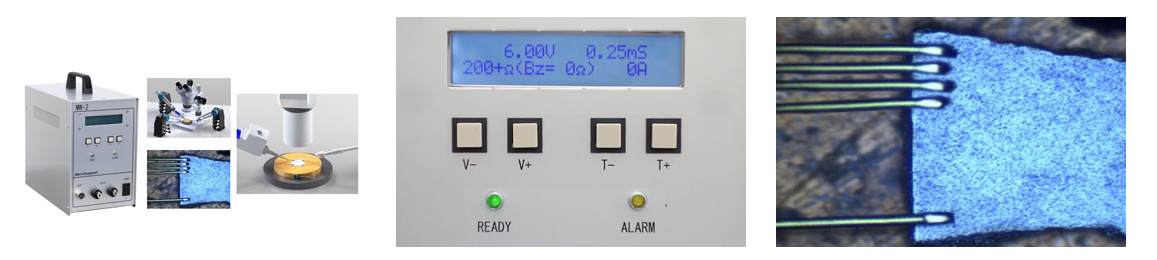
Miniaturization has become the engineering standard for a wide range of circuitry applications. Across microelectronics, advanced sensors, medical devices, and laboratory-scale systems, components continue to shrink while performance demands grow increasingly complex. As systems become smaller and more precise, one challenge becomes critical: how do you create reliable connections using ultra-fine metal wires in the 30–100μm range?
At this scale, precision is non-negotiable. Even minor process variations can compromise performance. Excessive heat may deform or weaken the wire, while insufficient energy can produce unstable joints with poor electrical continuity. Conventional joining methods such as soldering often fall short in these applications, introducing unnecessary thermal exposure, flux contamination, and limited process control.
This is where micro spot welding delivers a distinct advantage. Designed for highly localized energy control, the process enables precise wiring connection and modification for delicate fine-wire assemblies without compromising structural or electrical integrity. For engineers, researchers, and manufacturers working with ultra-fine metal wire, micro spot welding provides a reliable solution for creating durable, repeatable, and high-performance interconnections in advanced applications.
Challenges in Welding Fine Metal Wires
Working with ultra-thin metal wire leaves minimal room for error. Even before welding begins, handling itself becomes a technical task. Alignment must be exact, stability is critical, and the actual joining process introduces further challenges.
Several challenges define this space, including:
- Mechanical fragility: Wires in the 30–100μm range are highly susceptible to bending, deformation, or fracture under minimal mechanical stress. Any misalignment during welding can lead to immediate failure.
- Thermal sensitivity: These wires react quickly to heat. Even slight variations in welding current or energy input can cause localized melting, thinning, or microstructural distortion.
- Inconsistent joint formation: Without precise control, welds may vary in strength, leading to unreliable electrical connections.
- Damage to surrounding components: In dense assemblies, heat spread can affect nearby materials, especially in sensitive research setups or microelectronic systems.
- Repeatability concerns: In both laboratory and production environments, process consistency is essential. A joining method that cannot consistently reproduce stable weld quality is unsuitable for high-precision applications.
What is Micro Spot Welding?
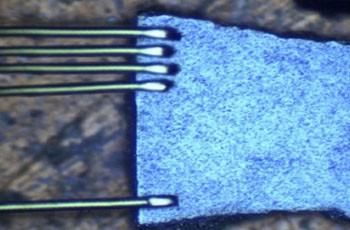
Image Credit: https://www.microsupport.co.jp/
Micro spot welding is a resistance-based joining process that uses precisely controlled electrical pulses to create a bond between conductive materials. Unlike conventional methods, the energy is delivered in very short bursts, typically in the millisecond range.
The process generates heat only at the precise contact point between the electrodes and the wire. This highly localized heating forms a metallurgical bond while minimizing thermal exposure to the surrounding material and adjacent components.
That controlled energy delivery makes it suitable for:
- Joining ultra-fine metal wire
- Performing delicate wiring connection and modification tasks
- Working in confined or sensitive environments
- Repairing broken connections
- Extending wiring paths
- Creating stable junctions
- modifying existing configurations.
A key advantage of micro spot welding is process consistency. When properly controlled, the welds are clean, repeatable, and mechanically as well as electrically stable. This level of reliability is particularly important when working with high-value components, precision assemblies, or experimental systems involving fine wire applications.
Micro Spot-Welding Process: How It Works
The micro spot-welding process is conceptually simple, but successful outcomes depend on precise control at every stage. Each step must be carefully executed to ensure a stable and reliable joint.
Following is a step-by-step workflow:
- Positioning the Wires: Ultra-fine metal wires are aligned using micromanipulators or precision fixtures. Accurate positioning is critical to ensure proper contact at the intended weld location.
- Electrode Placement: Electrodes are positioned at the weld point with controlled contact. The placement must be stable and consistent, without causing deformation or displacement of the wire.
- Controlled Current Application: A predefined electrical pulse is applied through the electrodes. The pulse duration is in the millisecond range and is carefully set based on the wire material and diameter.
- Localized Heat Generation: Electrical resistance at the contact point generates localized heat. This heat is confined to a small area, minimizing thermal impact on surrounding regions.
- Metallurgical Bond Formation: The localized heat causes the materials to fuse, forming a solid metallurgical bond. This completes the wiring connection and modification with high structural and electrical integrity.
The defining characteristic of this process is precision control. Parameters such as output voltage and pulse duration must be optimized according to the specific wire material, diameter, and application requirements. Once established, these parameters enable consistent and repeatable weld quality, making the process highly suitable for both research applications and controlled production environments.
System Capabilities for Micro Welding Applications
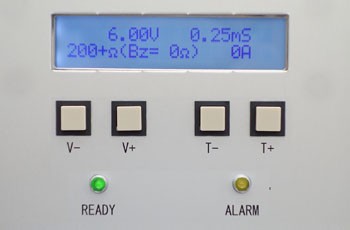
Image Credit: https://www.microsupport.co.jp/
Effective micro spot welding depends heavily on the capabilities of the system being used. Key system capabilities include:
- Output Voltage Control: Precise control of output voltage allows accurate adjustment of energy input. This is essential when working with ultra-fine metal wires in the 30–100μm range, where small changes can impact joint integrity.
- Adjustable Pulse Duration: The ability to control pulse generation time enables the system to accommodate different wire materials and diameters. Fine-tuning the pulse ensures sufficient bonding without excessive heat exposure.
- Capacitor-Based Energy Storage: A high-capacity capacitor stores and delivers energy for pulse current output. This ensures stable, consistent energy release with each weld, minimizing variability between operations.
- Stable Energy Delivery: Consistent energy output across repeated welds is critical for maintaining uniform quality. Stable delivery reduces the risk of weak or inconsistent joints.
- Post-Weld Resistance and Current Verification: Resistance and current values are displayed after welding to allow direct confirmation of connection status. This built-in verification step supports quality assurance without additional instrumentation.
- Integration with Precision Positioning Systems: Compatibility with micromanipulators improves alignment accuracy and is essential for maintaining consistent contact at the weld point.
Key Beneficial Features of Micro Spot-Welding Systems
- Advanced Parameter Control: Micro spot-welding systems provide precise control over output voltage and pulse generation time. This level of precision is essential for achieving reliable welds in fine metal wire, where even slight variations can impact joint quality.
- Minimal Heat-Affected Zone (HAZ): The welding process generates highly localized heat at the contact point. This minimizes thermal impact on surrounding areas, preserving the structural integrity of adjacent wire segments and sensitive components.
- Clean Welding with Reduced Dust and Spatter: Unlike traditional methods, micro spot welding does not require flux or filler material. The process produces clean, low-spatter welds, which is especially important in high-precision and sensitive environments such as semiconductor labs and research setups.
- Capability for Ultra-Fine Metal Wire (30–100μm): These systems are designed to handle ultra-thin metal wire with stability and control. The system delivers optimized energy for strong, consistent joints without damaging the wire.
- High Repeatability for Wiring Applications: Once welding parameters are established, the process delivers consistent results across multiple operations. This repeatability is critical for precision wiring connection and modification tasks in both laboratory and production environments.
- Millisecond-Level Pulse Control: Millisecond-level pulse regulation enables highly controlled energy delivery, ensuring effective fusion of fine metal wire without excessive thermal exposure. This is essential for maintaining weld quality at micro scale.
- Low Mechanical and Thermal Stress: Localized heating reduces stress on ultra-fine metal wire, minimizing the risk of deformation or breakage during welding.
Micro Spot-Welding vs Traditional Soldering for Fine Wires
For ultra-fine metal wire in the 30–100μm range, the differences between these two joining methods become significant.
| Parameter | Micro Spot Welding | Traditional Soldering |
| Heat Impact | Highly localized at the weld point | Heat spreads to surrounding areas |
| Thermal Control | Precise, controlled energy input | Limited control, higher risk of overheating |
| Precision | Very high, suitable for micro-scale applications | Limited precision at micro-scale |
| Suitability for 30–100μm Wires | Excellent, designed for ultra-fine metal wire | Often unreliable for very fine wires |
| Joint Formation | Direct metallurgical bond between materials | Relies on melted solder as an intermediate layer |
| Joint Cleanliness | No flux or filler required, clean process | Flux required, residue may remain |
| Mechanical Strength | Strong and stable joint | Dependent on solder quality and application |
| Electrical Conductivity | High, due to direct metal-to-metal bonding | Can vary depending on solder and contact quality |
| Process Consistency | High repeatability once parameters are set | Greater variability between operations |
| Post-Processing Requirements | Minimal or none | Often requires cleaning to remove flux residue |
Industries and Application Use Cases
- Semiconductor Failure Analysis and Circuit Repair: The welding process is used to repair, modify, or reconfigure micro-scale circuits during failure analysis. It enables precise reconnection of fine conductors without affecting adjacent structures.
- Microelectronics and PCB Modification: In compact electronic assemblies, it supports reliable connections using ultra-fine metal wire. This is particularly useful for prototype development, rework, and design modifications.
- Research and Laboratory Instrumentation: Laboratories use micro spot welding for wiring sensors, probes, and experimental setups. The process ensures stable electrical connections while maintaining the integrity of delicate components.
- Energy Systems and Battery Development: Fine wire connections are often required in battery research and energy storage systems. The welding process provides consistent joints that support reliable performance and testing accuracy.
- Medical Device and Micro-Component Assembly: In medical applications, where precision is critical, micro spot welding enables secure connections in miniature assemblies while minimizing thermal and mechanical impact.
Instrumentation for Micro Spot-Welding Applications
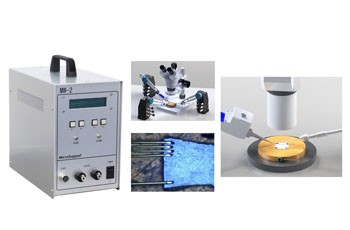
Image Credit: https://www.microsupport.co.jp/
At the scale of fine metal wire, even small variations in alignment or energy delivery can affect joint quality. A stable, well-integrated setup ensures consistent wiring connection and modification with repeatable results.
A typical configuration includes:
- Micro Spot-Welding Power Source: Delivers precisely controlled electrical pulses with defined output voltage and pulse duration. A high-capacity capacitor provides stable energy storage and release, essential for forming consistent joints without overheating fine metal wire.
- Micromanipulators: Used for accurate positioning of ultra-fine wires at the weld point. Precise alignment is critical before pulse application. Combining the power source with a micromanipulator maximizes positioning accuracy and weld consistency.
- Electrodes and Fixtures: Provide stable contact and ensure consistent energy transfer during welding. Proper fixture design helps maintain repeatability across multiple welds.
- Optical Observation Systems: Microscopes or imaging systems assist in aligning fine wire structures and monitoring the weld zone during operation.
When properly integrated, these components improve process stability, reduce setup variability, and support consistent results in wiring connection and modification applications.
Precision Starts with the Right Micro Spot-Welding Solution
Precision wiring at the micro scale is demanding. Working with ultra-fine metal wire in the 30–100μm range requires tight control over alignment and energy input. Small variations can easily affect joint quality and reliability.
For applications involving fine metal wire and micro-scale interconnections, selecting the appropriate micro spot-welding system is critical to achieving accurate and repeatable results.
Connect with Barnett Technical Services to explore micro spot-welding solutions, review your application needs, and identify the right setup for accurate, repeatable wiring connection and modification.